Publishers should compare CTV and OTT SSPs across five key dimensions: demand quality, technical performance, data and measurement, brand safety and compliance, and regional capabilities (e.g., in LATAM and APAC). The “best” SSP for CTV ads depends on your content, regions, long-term monetization goals, and control requirements – especially if you consider white‑label SSP options.
CTV and OTT remain among the fastest-growing advertising channels. One of the reasons behind this growth is the increasing number of users switching from linear TVs to streaming services. Additionally, OTT and CTV ads are often highly engaging, while programmatic technology enables effective targeting.
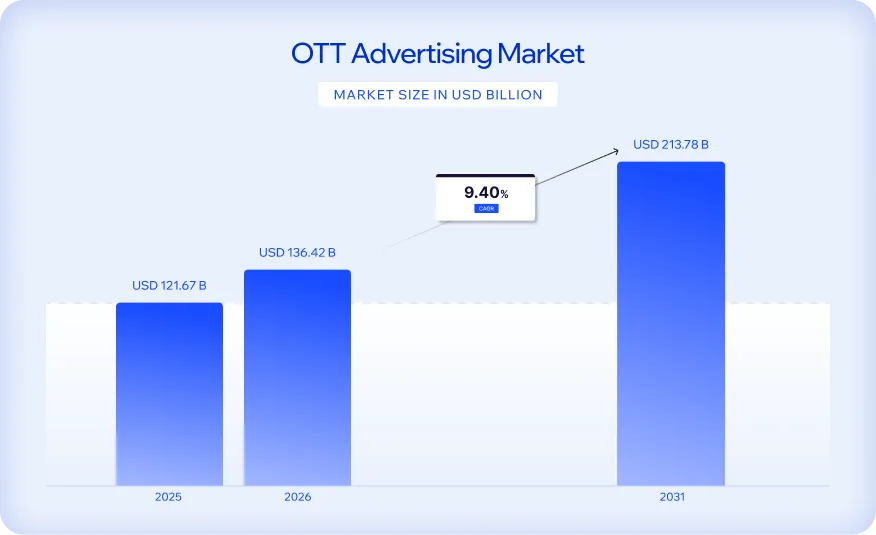
Thus, in the USA, CTV ad spend reached over $33 billion in 2025. By 2029, this figure is expected to surpass $52 billion. As for the OTT advertising market, it is forecasted to expand from over $121 billion in 2025 to more than $213 billion by 2031.
At the same time, the landscape has become increasingly complex. Inventory is distributed across multiple device ecosystems (Roku, Fire TV, Samsung, LG, and others) along with thousands of streaming apps and regional markets. This makes technology decisions far more strategic than they were just a few years ago.
Let’s say when you search for “best SSP for CTV in Latin America” or “best SSP for APAC publishers”, you may find the same shortlist of well-known vendors. However, while these lists can be a good starting point, they rarely suggest a decision framework. Requirements can differ significantly between publishers operating in North America, companies expanding into Latin America or APAC, and businesses building specialized CTV marketplaces.
In this guide, we will provide a practical evaluation framework for comparing SSPs for CTV and OTT advertising. We will examine the most important criteria, discuss region-specific factors that should influence your decision, and explore when running your own white-label SSP or ad exchange may be the better long-term strategy. Read on to discover how to make the right choice.
What makes SSP selection different for CTV and OTT ads?
At first glance, CTV and OTT advertising may look pretty similar to other types of digital marketing. Let’s say both CTV and desktop video ads can be launched via a programmatic solution. However, the similarities largely end here.
CTV is not just “big web video”
CTV and OTT operate in a fundamentally different environment, which changes how supply is packaged, sold, and monetized. Unlike web or mobile advertising, where users actively browse, click, and switch between pages or apps, CTV viewing is typically a lean-back experience. Audiences consume long-form content from the comfort of their living rooms, often watching together as a household rather than as individual users. Viewing sessions are longer, interruptions are less frequent, and user interactions are minimal. One more nuance is that 31% of viewers stream content on multiple CTV devices in a single day.
Instead of inventory being associated with websites and domains, CTV inventory is frequently tied to streaming applications, operating systems, smart TV manufacturers, and device ecosystems. Some premium inventory may only be available through selected supply paths or private marketplace agreements.
Thus, SSP selection is much more than a technical integration decision. The SSP you choose directly influences the quality and diversity of advertiser demand available to your inventory, and your ability to participate in premium private marketplaces.
Measurement also becomes more complex. Traditional browser identifiers and cookies play a much smaller role, while household-level identifiers, device IDs, and privacy-compliant identity solutions become increasingly important. In turn, frequency caps must be set up for shared household viewing, while ensuring brand safety becomes a more challenging task due to fragmentation.
Why “best SSPs for CTV and OTT” is the wrong starting question
Many guides covering the topic “how to choose an SSP for publishers” simply list the biggest vendors. However, these are just rankings of the largest platforms, not solutions that are most suitable for your business. Some industry reports and market studies may provide more details on region-specific SSPs for CTV and OTT monetization, but they still should be viewed as a starting point, not a final recommendation.
Instead of “which SSP ranks highest?”, you should ask “which SSP aligns best with my business objectives?” – that is exactly what the rest of this guide is designed to answer.
The five dimensions of comparing CTV SSPs
When choosing a supply-side platform for CTV ads (or OTT advertisements), you need to consider five main factors. Let’s take a closer look at each of them.
1) Demand strength and fit for CTV ads
Here, you need to pay attention to the following aspects:
The breadth and quality of the SSP's demand ecosystem. Does it integrate with, for instance, major DSPs and premium direct buyers that actively invest in CTV campaigns? More importantly, determine whether those buyers align with your audience and content.
Industry specialization. For instance, buyers looking for premium sports inventory often have different campaign objectives than those advertising on news channels or entertainment streaming services. An SSP with strong relationships in your vertical is often better positioned to attract relevant advertisers and secure higher-value deals.
Platform coverage. Since CTV inventory is distributed across multiple ecosystems, you should understand where an SSP has established demand relationships and where its marketplace is strongest.
Regional expertise. Demand patterns vary considerably between North America, Latin America, Europe, the Middle East, Africa, and APAC. For example, some SSPs offer extensive demand in North America but limited buyer activity elsewhere.
2) Technical performance, latency, and fill
The next nuances to evaluate are as follows:
Technical performance and latency. If an SSP responds too slowly or cannot efficiently process requests during traffic spikes, valuable revenue opportunities may be lost.
Support for modern CTV infrastructure. Many streaming publishers rely on server-to-server integrations and Server-Side Ad Insertion (SSAI) to deliver seamless viewing experiences. Your SSP should integrate smoothly into these workflows.
Global performance. An SSP that performs exceptionally well in North America may experience higher latency or lower bid density in LATAM or APAC, making regional testing essential before committing to a long-term partnership. For global publishers, this criterion is exceptionally important.
The ability to handle peak streaming events. Peak traffic periods place significant pressure on auction infrastructure, and an SSP should be able to maintain stable response times without compromising fill or reliability. Make sure to check this if you stream live sports, major premieres, or other events like this.
3) Data, measurement, and CTV-specific reporting
Effective optimization depends on proper analytics and reporting, so here are the factors to consider:
Granularity of reporting. A strong SSP should provide reporting beyond basic impressions and revenue. Ideally, you should be able to analyze performance by streaming app or channel, device platform, operating system, geographic market, audience segment, ad format, etc.
Measurement capabilities. Modern CTV campaigns increasingly rely on integrations with attribution providers, viewability vendors, fraud detection platforms, and audience measurement solutions. Since CTV advertising does not rely on cookies, support for privacy-friendly identity solutions and household-level measurement is extremely important.
Transparency. Access to detailed log-level data enables you to optimize auction strategies more effectively. This becomes particularly valuable for companies operating their own white-label SSP or exchange (like monetization solutions offered by Attekmi).
The ways an SSP addresses CTV-specific challenges. Features such as household frequency management, co-viewing measurement, campaign deduplication across devices, and audience reporting can significantly improve campaign performance and advertiser satisfaction.
4) Brand safety, fraud, and compliance in CTV
Then, review the following criteria:
Fraud protection and CTV SPO (supply path optimization). Evaluate the platform's approach to invalid traffic detection, app spoofing prevention, and supply path transparency. For instance, a transparent supply path not only improves buyer confidence but also helps you demonstrate inventory authenticity.
Brand safety. Look for integrations with established verification providers, along with tools that allow you to control advertiser categories, sensitive content exclusions, and private marketplace access.
Regional specificity. Fraud patterns, regulatory requirements, and buyer expectations can vary across different regions. An SSP should demonstrate both technical expertise and operational experience in the regions where you monetize inventory.
Privacy compliance. As regulations continue to evolve, you need partners that support compliant identity solutions and responsible audience targeting.
5) Partnership model, service, and control
Last but not least, explore the following:
Commercial model. Are fees transparent? Does the SSP operate on a net or gross bidding model?
Customer support. Strong account management teams proactively monitor performance, recommend optimizations, identify new demand opportunities, and help resolve technical issues before they affect revenue. Market insights and strategic guidance can become particularly valuable as CTV evolves rapidly.
The required level of control. For some publishers, a third-party SSP is enough. Others may prefer a white-label SSP or exchange to gain maximum control over their operations. For instance, Attekmi offers a white-label monetization platform that can be fully customized: from UI personalization to custom on-request feature development. Define your needs and discover what options your potential provider offers.
H2: How to apply this framework step by step
Now that you know what to pay attention to when choosing an SSP for CTV monetization, it is time to dive deep into the steps that you need to take in order to make a strategic decision.
Step 1 – Map business goals and CTV inventory profile
First and foremost, you should clearly identify your objectives. Otherwise, it will be difficult for you to determine whether one solution really drives better results or simply excels in different areas.
Start by creating a profile of your CTV inventory. Consider the type of content you monetize and how it is distributed. Are you operating, for instance, an ad-supported video-on-demand (AVOD) service, a FAST channel, or a broadcaster's VOD platform? Each inventory type attracts different advertisers and buying strategies, which can influence which SSP delivers the strongest results.
Geography matters as well. You need to define the regions where you currently have or want to grow CTV ads revenue. For example, if you already operate in North America, you may want to expand your operations into LATAM.
With these insights in mind, you can finally decide on your objectives. Depending on your strategy, you may want to:
Increase CPMs or RPMs.
Access premium buyers.
Enhance supply path optimization.
Gain more detailed reporting and measurement capabilities.
Simplify operational workflows by reducing the number of integrations.
Build greater control over your monetization infrastructure.
Expand into new regions.
These are just examples. Remember to keep your goals SMART: specific, measurable, achievable, relevant, and time-bound.
Step 2 – Shortlist SSPs per region and platform
Considering your objectives, regions, and the inventory type, you can start searching for relevant supply-side solutions. Do not rely on a single “top CTV SSP comparison” list. Instead, conduct thorough research to prepare a well-informed shortlist where every platform will meet your basic criteria. Pay attention to industry reports and case studies to identify platforms that match your vertical and content. Searching for reviews on trusted resources (e.g., Clutch) can be helpful as well.
Step 3 – Run structured tests (not just plug-and-pray)
After you analyze the selected SSPs and define the most suitable platforms, it is time to test them. This way, you will make a data-driven decision regarding which solution (or solutions) to prioritize.
Whenever possible, integrate shortlisted SSPs in parallel and allocate comparable portions of your CTV traffic to each platform. This approach creates a fair comparison by exposing each SSP to similar inventory conditions. During the evaluation period, measure more than headline CPMs. Revenue metrics should be considered alongside fill rate, bid density, latency, auction competitiveness, demand diversity, and overall platform stability. Segment the results to understand where each SSP performs best.
Testing should also run long enough to minimize temporary fluctuations. A fixed evaluation window of approximately 30 to 60 days generally provides a more representative picture than short-term comparisons that may be affected by seasonality, campaign launches, or major live events.
Note that your objective is not simply to identify the SSP with the highest bid prices, but the one that delivers the strongest overall monetization outcomes for your specific business.
Step 4 – Decide on direct SSP partners vs your own SSP layer
Finally, you should determine how much of the monetization stack you want to control. The most common approach is to integrate one or more third-party SSPs into your CTV monetization stack. This model is relatively straightforward to implement and provides access to established demand without requiring publishers to manage marketplace infrastructure themselves.
If you require greater control and flexibility, consider launching a white-label SSP for CTV (or an ad exchange). This way, you will have your own monetization layer, with third-party platforms plugging into your solution. With white-label technology, you operate under your own brand, decide on the auction rules, control demand relationships, etc.
For instance, Attekmi offers a white-label monetization solution that supports CTV environments and formats, as well as provides advanced targeting and filtering settings, analytics and reporting capabilities, fraud protection mechanisms, and so on.
Specific considerations for LATAM and APAC CTV SSP choice
Market maturity, streaming adoption, device ecosystems, buyer activity, and regulatory environments all influence which SSP is likely to deliver the best results. If you plan to expand internationally, evaluating regional fit is just as important as evaluating overall platform capabilities.
LATAM: fragmentation, platform mix, and SPO
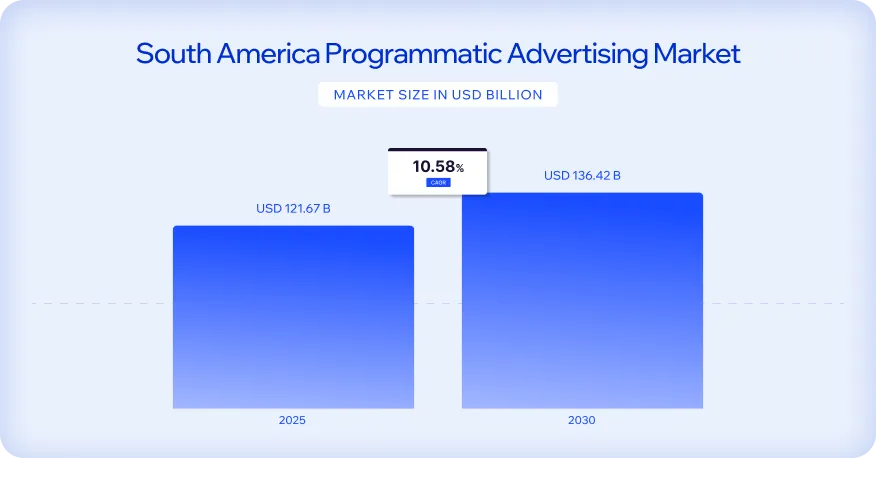
The LATAM programmatic advertising market keeps growing, with CTV among the most important demand drivers. For instance, with 89 million monthly viewers, Brazil is the largest CTV market outside the United States.
Source: Mordor Intelligence
However, fragmentation remains an issue. Apart from searching for relevant reports, include at least one global SSP with an established presence in LATAM alongside one or two regional specialists that may offer stronger buyer relationships in specific countries or verticals. Structured testing will reveal whether regional expertise translates into higher fill rates, stronger demand, or better pricing for your inventory. Besides, pay extra attention to fraud and SPO metrics.
APAC: platform diversity and mobile/CTV convergence
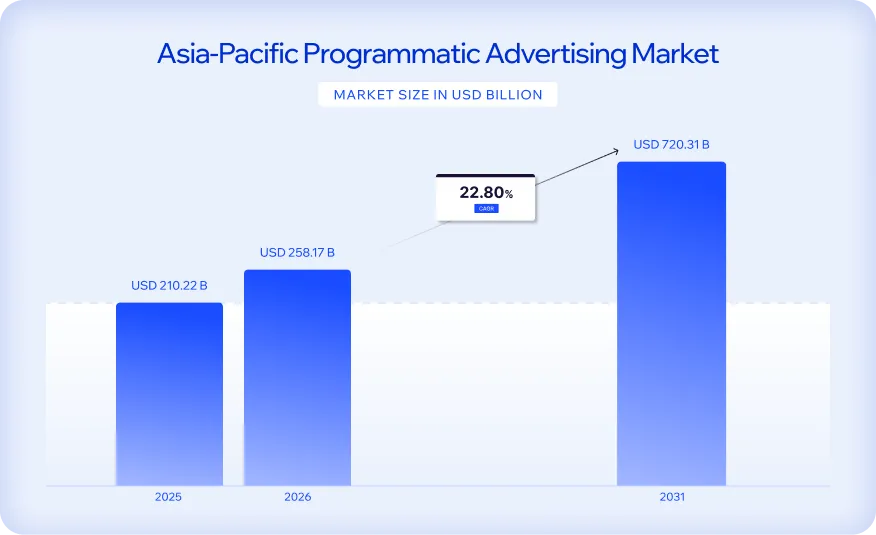
In APAC, the programmatic advertising market is growing as well – it is expected to surpass $720 billion by 2031. CTV is a part of this growth.
Source: Mordor Intelligence
However, the market consists of dozens of countries with distinct streaming ecosystems, device preferences, languages, regulations, and advertising practices. This diversity makes local expertise particularly valuable when selecting an SSP.
Infrastructure also plays a larger role. Network latency, regional data centers, and relationships with local advertisers and agencies can directly affect auction performance and fill rates. An SSP with strong technical infrastructure and dedicated support teams in APAC may outperform a larger global competitor that lacks local presence, especially during high-volume streaming events.
If your CTV strategy blends mobile and big‑screen experiences, ensure the SSP can coherently handle both. Look for platforms that provide unified reporting, flexible audience management, and measurement capabilities that span both mobile and CTV inventory. This makes it easier to optimize campaigns.
Where a white-label SSP like Attekmi fits in
Note that after testing different platforms, you may prefer launching your own monetization solution. The white-label platform from Attekmi offers the following benefits:
An individual approach and a unique roadmap for every client.
Complete customization (including custom functionalities).
Support for CTV environments and formats.
Advanced targeting and filtering settings.
Comprehensive analytics and reporting.
Support for different regions.
Seamless scalability.
Premium customer service.
Compliance with regulations like GDPR, CCPA, etc.
With a white-label solution from Attekmi, you are in full control of everything, while our support team will deliver not only on-request assistance but also proactively help you detect opportunities and weaknesses.
Conclusion
There is no universal "best SSP for CTV and OTT advertising" recommendation. The right choice depends on your inventory, audience, target markets, business objectives, and long-term monetization strategy.
Instead of relying on rankings or familiar vendor names alone, evaluate potential partners through a structured framework. Assess the strength and relevance of their demand, measure their technical performance and scalability, examine the depth of their reporting and measurement capabilities, verify their approach to brand safety, fraud prevention, and compliance, and consider whether their partnership model aligns with the level of transparency and control your business requires. Additionally, search for regional insights and validate every assumption with structured testing.
Last but not least, remember that choosing a white-label monetization solution can be the most effective approach in case you require ultimate control over your operations.
Ready to launch your own monetization ecosystem? Contact Attekmi.
FAQ
While both web and CTV SSPs connect publishers with advertiser demand, CTV SSPs are designed to support the unique requirements of streaming environments. They typically offer stronger support for server-side ad insertion (SSAI), CTV-specific measurement, household-level targeting, and integrations with connected TV platforms and streaming apps.
Rather than looking for a universally "best" SSP, publishers should evaluate platforms based on demand quality, technical performance, reporting capabilities, brand safety features, and regional coverage. Running structured tests with multiple SSPs is the most reliable way to determine which solution performs best for a specific OTT app or FAST channel.
Not necessarily. Buyer demand, platform adoption, and market dynamics differ between regions, so an SSP that performs well in North America may not deliver the same results in Latin America. Publishers should compare both global and regional SSPs while testing performance on their own inventory.
APAC publishers should prioritize SSPs with strong regional infrastructure, local buyer relationships, and reliable technical performance across diverse markets. It is also important to choose a platform that supports cross-device measurement and monetization if audiences regularly move between mobile and connected TV.
A white-label SSP becomes a strong option when publishers want greater control over demand relationships, auction rules, reporting, and private marketplaces. It is particularly valuable for companies managing significant CTV inventory, operating multiple streaming properties, or building their own branded monetization ecosystem.


'%3e%3cpath%20d='M415.5%20380.133C415.5%20554.655%20911.5%20609.133%20714%20818.633C447%20850.133%20200%20677.655%20200%20503.133C200%20328.611%20341.478%20187.133%20516%20187.133C690.522%20187.133%20415.5%20205.611%20415.5%20380.133Z'%20fill='%231A4CFF'/%3e%3c/g%3e%3cg%20filter='url(%23filter1_f_654_7533)'%3e%3cpath%20d='M819.862%20539.146C969.42%20389.588%20963.912%20273.412%201000.6%20310.096C1037.28%20346.78%201059.92%20590.588%20910.362%20740.146C760.804%20889.704%20503.861%20847.646%20447.362%20760.146C348.862%20547.146%20670.304%20688.704%20819.862%20539.146Z'%20fill='%23052AAE'/%3e%3c/g%3e%3cg%20filter='url(%23filter2_f_654_7533)'%3e%3cpath%20d='M647.331%20285.725C443.031%20230.983%20408.998%20311.131%20358.6%20243.729C295.498%20194.631%20571.852%2052.1078%20776.152%20106.85C980.452%20161.592%201072.5%20405.139%201024.97%20497.82C889.759%20689.623%20851.631%20340.467%20647.331%20285.725Z'%20fill='%231B4DFF'/%3e%3c/g%3e%3c/g%3e%3cdefs%3e%3cfilter%20id='filter0_f_654_7533'%20x='0'%20y='-12.8672'%20width='960.465'%20height='1035.25'%20filterUnits='userSpaceOnUse'%20color-interpolation-filters='sRGB'%3e%3cfeFlood%20flood-opacity='0'%20result='BackgroundImageFix'/%3e%3cfeBlend%20mode='normal'%20in='SourceGraphic'%20in2='BackgroundImageFix'%20result='shape'/%3e%3cfeGaussianBlur%20stdDeviation='100'%20result='effect1_foregroundBlur_654_7533'/%3e%3c/filter%3e%3cfilter%20id='filter1_f_654_7533'%20x='228.938'%20y='103.27'%20width='998.816'%20height='935.965'%20filterUnits='userSpaceOnUse'%20color-interpolation-filters='sRGB'%3e%3cfeFlood%20flood-opacity='0'%20result='BackgroundImageFix'/%3e%3cfeBlend%20mode='normal'%20in='SourceGraphic'%20in2='BackgroundImageFix'%20result='shape'/%3e%3cfeGaussianBlur%20stdDeviation='100'%20result='effect1_foregroundBlur_654_7533'/%3e%3c/filter%3e%3cfilter%20id='filter2_f_654_7533'%20x='149.441'%20y='-105.473'%20width='1087.81'%20height='860.301'%20filterUnits='userSpaceOnUse'%20color-interpolation-filters='sRGB'%3e%3cfeFlood%20flood-opacity='0'%20result='BackgroundImageFix'/%3e%3cfeBlend%20mode='normal'%20in='SourceGraphic'%20in2='BackgroundImageFix'%20result='shape'/%3e%3cfeGaussianBlur%20stdDeviation='100'%20result='effect1_foregroundBlur_654_7533'/%3e%3c/filter%3e%3c/defs%3e%3c/svg%3e)