The goal of programmatic advertising seems simple. Marketers strive to reach their target audiences in the most effective way possible. Media owners want to drive higher income and deliver more relevant experiences to their visitors. However, in practice, things are pretty complicated.
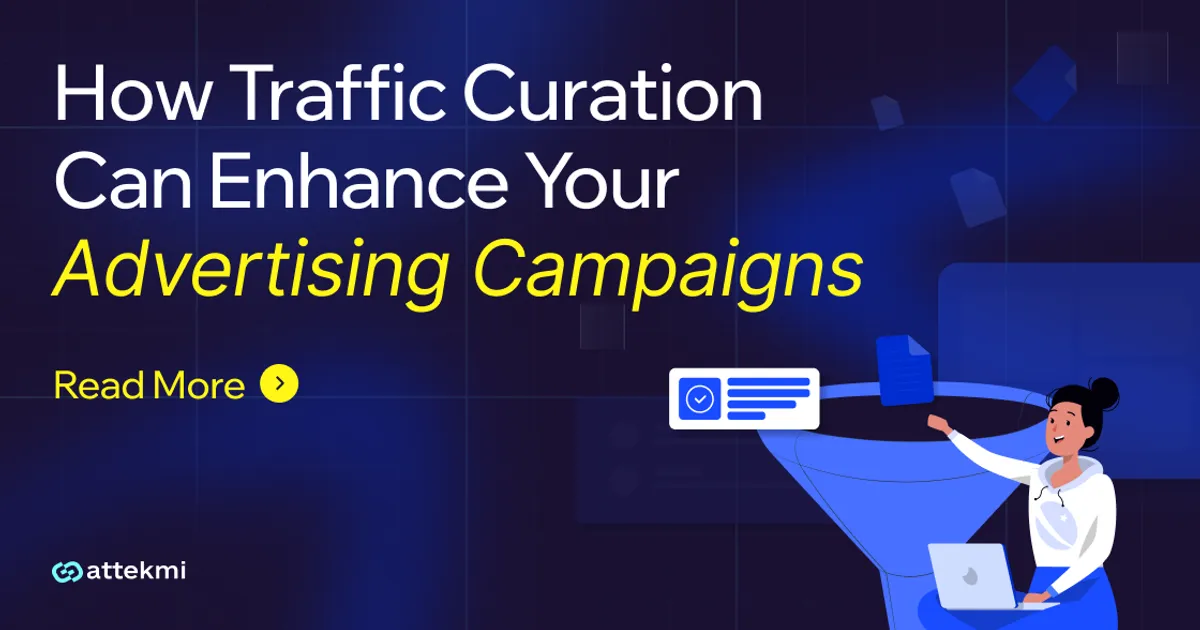
Effective performance requires both sides to use loads of different tactics, and traffic curation is one of them. But what is traffic curation in advertising? In this guide, we explore its definition, benefits, use cases, and more. Read on to discover how programmatic traffic curation can maximize the efficiency of your strategy.
Key takeaways:
Traffic curation is all about filtering and pre-packaging the inventory according to specific criteria.
The key benefits for advertisers include higher-quality impressions, better performance, increased ROI, and more efficient budget allocation.
Offering greater flexibility, traffic curation is an effective alternative to other SPO-friendly approaches, such as direct deals and PMPs.
Depending on your goals, consider combining traffic curation with other programmatic models.
What is traffic curation?
Curation in programmatic advertising implies filtering and optimizing the inventory according to predefined criteria, such as, for instance, audience quality, contextual relevance, performance signals, brand safety standards, etc.
Instead of buying impressions from the entire open marketplace, buyers access a filtered subset of inventory assembled by a curator (which can be a DSP, SSP, data provider, or independent platform). The goal is to reduce waste, increase transparency, and improve performance predictability.
Traffic curation focuses on quality and intent, while open auction buying is all about scale. Let’s explore the key differences.
Inventory selection
Traffic curation implies pre-selecting and bundling inventory according to specific criteria. Low-quality or redundant supply is filtered out before bidding even begins. As for open auctions, an advertiser bids across a broad, unfiltered pool of impressions in real time.
Transparency
Traffic curation often prioritizes supply path optimization (SPO), limiting intermediaries and ensuring clearer visibility. Curated deals typically define approved SSPs or publisher lists. In open auctions, inventory can “travel” through multiple resellers and intermediaries. A buyer may face duplication and difficulties in identifying the true source of an impression.
Quality control
With traffic curation, proactive quality standards are applied. In the case of open auctions, everything happens reactively, which increases the risk of misaligned placements.
Competition and pricing dynamics
An open auction is a highly competitive environment. CPM volatility is common, especially for premium inventory. Curated traffic advertising introduces a solution, as the competition there is lower. Pricing is typically more stable and performance-oriented rather than purely auction-driven.
Scale vs precision
Traffic curation is optimized for precision, efficiency, and outcome-driven buying. Scale is intentionally controlled. Open auctions are about reach and scale. Precision heavily depends on targeting settings and algorithmic bidding strategies.
Strategic objective
Traffic curation is best suited for advertisers focused on performance efficiency, brand safety, curated audiences, or reducing supply chain complexity. In turn, open auction buying is useful for broad awareness, testing new markets, or maximizing reach.
Why traffic curation matters in programmatic media buying
A curation traffic strategy can help solve an entire range of challenges, such as brand safety risks, inefficient ad spend, and others. Take a closer look at the details.
Reducing invalid traffic (IVT) and ad fraud
IVT and ad fraud are among the most “popular” concerns related to programmatic advertising. In open auctions, a campaign is often exposed to bot traffic, domain spoofing, and other dangers. Traffic curation mitigates these risks by pre-filtering supply sources, working with verified publishers and direct SSP paths, etc.
Improving brand safety and suitability
Open auction buying can place ads next to inappropriate content. Traffic curation improves protection by applying contextual filtering before inventory enters the bid stream, aligning supply with suitability standards, and removing high-risk categories proactively.
Increasing transparency in the supply chain
Programmatic supply chains can involve multiple intermediaries, which may create duplicate bid requests, lead to unclear fee structures, etc. Curation helps increase transparency.
Enhancing media efficiency and performance stability
Instead of value, open auctions prioritize price competition. As a result, a marketer may experience inconsistent performance and over-optimization toward cheap reach. Traffic curation helps stabilize the performance as it focuses on high-quality inventory, reducing bid duplication, and concentrating spend on credible supply.
“Traffic curation is the evolution of programmatic from blind scale to intentional scale. When you control the quality of supply before the bid even happens, you don’t just reduce waste – you improve how every algorithm performs.”
Roman Vrublivskyi
Attekmi’s CEO
How traffic curation works in the programmatic ecosystem
Now, let’s explore the mechanisms and processes behind curated traffic in programmatic advertising.
The role of SSPs and curators
SSPs expose inventory to approved curation partners, share the required data (context, viewability signals, etc.), and enable deal ID packaging or private marketplace configurations.
In turn, curators select inventory based on predefined quality criteria, apply fraud filters and supply path optimization, bundle inventory into curated deal IDs, and remove duplicate or resold impressions.
Creation of curated deal IDs
Once filtered, inventory is packaged into deal IDs or curated segments. For instance, these can be high-intent auto buyers or users interested in premium finance content. These deal IDs are then pushed into DSPs, where buyers can activate them.
Integration with DSP targeting
Within the DSP, advertisers can still apply geo-targeting, frequency caps, device segmentation, etc. Instead of bidding across the entire open exchange, the DSP competes only within the curated supply set.
Data layers and inventory filtering
Data plays a crucial role in traffic curation, and multiple layers may be applied before impressions reach buyers. These may be viewability thresholds, attention metrics, fraud detection signals, contextual classification, and so on. This way, low-quality inventory is filtered out.
SPO
In open auctions, a single media owner impression may appear multiple times through different intermediaries. Curation typically addresses this by selecting the most direct SSP connection, excluding reseller chains, and reducing bid duplication. This improves efficiency and ensures buyers compete on unique impressions.
Ongoing optimization
Traffic curation is not static. Curators analyze win rates, conversion rates, and other factors, and then optimize accordingly. Based on results, inventory sources may be expanded, tightened, or reprioritized.
Key benefits of traffic curation for advertisers
You are already familiar with some of the benefits of following a curation traffic strategy. However, here are several more things to consider.
Higher-quality impressions
Curated supply prioritizes verified publishers, high-viewability environments, and valid traffic. This increases the probability that impressions are not just delivered, but actually seen by real users in meaningful contexts. This way, the overall campaign effectiveness is improved.
Better performance and ROI
Another benefit on this list is that low-signal and fraudulent inventory is removed in advance. As a result, conversion rates and ROI grow, while wasted impressions decrease. Cost per acquisition also becomes more stable.
More efficient budget allocation
AdTech traffic curation solutions help you focus on proven inventory, reduce duplication, and minimize hidden fees. Therefore, you allocate your budget more effectively.
Stronger alignment with outcome-based buying
Modern advertisers are increasingly focusing on attention metrics, incrementality, and real business impact. Premium curated traffic helps align the supply strategy with these priorities. It prioritizes the environments that support meaningful engagement, not just reach.
Use cases of traffic curation across channels
Traffic curation can be applied across diverse environments, formats, and strategies. Here are several examples.
Curation in display and mobile advertising
The display environment is pretty “crowded”, which makes it prone to domain spoofing, the risks of MFA websites, etc. In turn, the mobile type of inventory often involves accidental clicks and poor user experience. Traffic curation helps mitigate these risks.
Curated CTV and video inventory
CTV and video placements often imply higher CPMs, which makes quality control even more important. That is exactly where traffic curation comes to the rescue.
B2B and niche audience curation
For B2B or highly specialized campaigns, scale is less important than precision. Curation enables industry-specific bundles, contextual alignment, and first-party data enrichment.
Best practices for implementing traffic curation
If you want to buy curated traffic effectively, here are several tips to consider.
Defining quality criteria and KPIs
Start by deciding what quality means for your business and defining the following:
Viewability benchmarks
Acceptable IVT thresholds
Brand safety and suitability standards
Conversion rate or CPA targets
Attention or engagement metrics
Make sure to align the strategy with your campaign goals.
Partner selection
Evaluate SSPs, curation platforms, and supply partners based on transparency, fraud prevention standards, data enrichment capabilities, reporting quality, and other factors.
Prioritize partners that can meet your needs in full and deliver ongoing support, like, for instance, Attekmi. We are an AdTech solutions provider offering a variety of platforms and custom development – we are here to help your business grow and build a new profit resource.
Targeting setup
Make sure to apply the right targeting settings via your DSP to maximize the performance of your campaigns.
Continuous monitoring
Another thing to add is that you should regularly monitor viewability, conversions, incrementality, and other metrics to detect opportunities and weaknesses promptly.
Conclusion
While traffic curation can be a very effective tactic, you may still want to combine it with other approaches: open auctions, direct deals, and so on. Each model serves a different purpose, so using several of them simultaneously may be the way to reach the desired results with ultimate efficiency.
However, whichever model you decide to leverage, make sure to monitor the performance continuously, as this enables you to adjust your strategy on time.
Looking for a trusted AdTech provider? Contact us.
FAQ
No. PMPs are invitation-only auctions where publishers sell inventory to selected advertisers. Traffic curation implies filtering, optimizing, and packaging the supply before it reaches the auction. Curated deals may use PMPs, but curation also involves data layering, SPO, and quality controls.
Yes. By removing low-quality and fraudulent impressions, concentrating spend on higher-signal inventory, and reducing supply duplication, traffic curation often increases ROI and conversion rates. Note that ROI improves not from cheaper CPMs, but from more efficient and intentional media allocation.
Traffic curation reduces fraud by pre-filtering supply sources, prioritizing verified publishers, eliminating reseller-heavy paths, validating ads.txt and seller.json signals, and applying strict IVT thresholds. Instead of blocking fraud after bidding, it limits exposure at the infrastructure level before impressions enter the auction.


'%3e%3cpath%20d='M415.5%20380.133C415.5%20554.655%20911.5%20609.133%20714%20818.633C447%20850.133%20200%20677.655%20200%20503.133C200%20328.611%20341.478%20187.133%20516%20187.133C690.522%20187.133%20415.5%20205.611%20415.5%20380.133Z'%20fill='%231A4CFF'/%3e%3c/g%3e%3cg%20filter='url(%23filter1_f_654_7533)'%3e%3cpath%20d='M819.862%20539.146C969.42%20389.588%20963.912%20273.412%201000.6%20310.096C1037.28%20346.78%201059.92%20590.588%20910.362%20740.146C760.804%20889.704%20503.861%20847.646%20447.362%20760.146C348.862%20547.146%20670.304%20688.704%20819.862%20539.146Z'%20fill='%23052AAE'/%3e%3c/g%3e%3cg%20filter='url(%23filter2_f_654_7533)'%3e%3cpath%20d='M647.331%20285.725C443.031%20230.983%20408.998%20311.131%20358.6%20243.729C295.498%20194.631%20571.852%2052.1078%20776.152%20106.85C980.452%20161.592%201072.5%20405.139%201024.97%20497.82C889.759%20689.623%20851.631%20340.467%20647.331%20285.725Z'%20fill='%231B4DFF'/%3e%3c/g%3e%3c/g%3e%3cdefs%3e%3cfilter%20id='filter0_f_654_7533'%20x='0'%20y='-12.8672'%20width='960.465'%20height='1035.25'%20filterUnits='userSpaceOnUse'%20color-interpolation-filters='sRGB'%3e%3cfeFlood%20flood-opacity='0'%20result='BackgroundImageFix'/%3e%3cfeBlend%20mode='normal'%20in='SourceGraphic'%20in2='BackgroundImageFix'%20result='shape'/%3e%3cfeGaussianBlur%20stdDeviation='100'%20result='effect1_foregroundBlur_654_7533'/%3e%3c/filter%3e%3cfilter%20id='filter1_f_654_7533'%20x='228.938'%20y='103.27'%20width='998.816'%20height='935.965'%20filterUnits='userSpaceOnUse'%20color-interpolation-filters='sRGB'%3e%3cfeFlood%20flood-opacity='0'%20result='BackgroundImageFix'/%3e%3cfeBlend%20mode='normal'%20in='SourceGraphic'%20in2='BackgroundImageFix'%20result='shape'/%3e%3cfeGaussianBlur%20stdDeviation='100'%20result='effect1_foregroundBlur_654_7533'/%3e%3c/filter%3e%3cfilter%20id='filter2_f_654_7533'%20x='149.441'%20y='-105.473'%20width='1087.81'%20height='860.301'%20filterUnits='userSpaceOnUse'%20color-interpolation-filters='sRGB'%3e%3cfeFlood%20flood-opacity='0'%20result='BackgroundImageFix'/%3e%3cfeBlend%20mode='normal'%20in='SourceGraphic'%20in2='BackgroundImageFix'%20result='shape'/%3e%3cfeGaussianBlur%20stdDeviation='100'%20result='effect1_foregroundBlur_654_7533'/%3e%3c/filter%3e%3c/defs%3e%3c/svg%3e)