How can publishers increase revenue with white-label AdTech? Such infrastructure enables media owners to move beyond standard SSP capabilities and gain greater control over auctions, fees, and traffic quality. By launching branded solutions, optimizing supply paths, and improving compliance, publishers can increase revenue, ensure differentiation, and build long-term programmatic infrastructure under their full control.
The global AdTech market keeps growing. In 2025, its size exceeded $986 billion, and by 2034, this figure is forecasted to surpass $3,227 billion. This progress is driven by multiple factors, and the fact that more and more companies are becoming AdTech operators themselves is on the list.
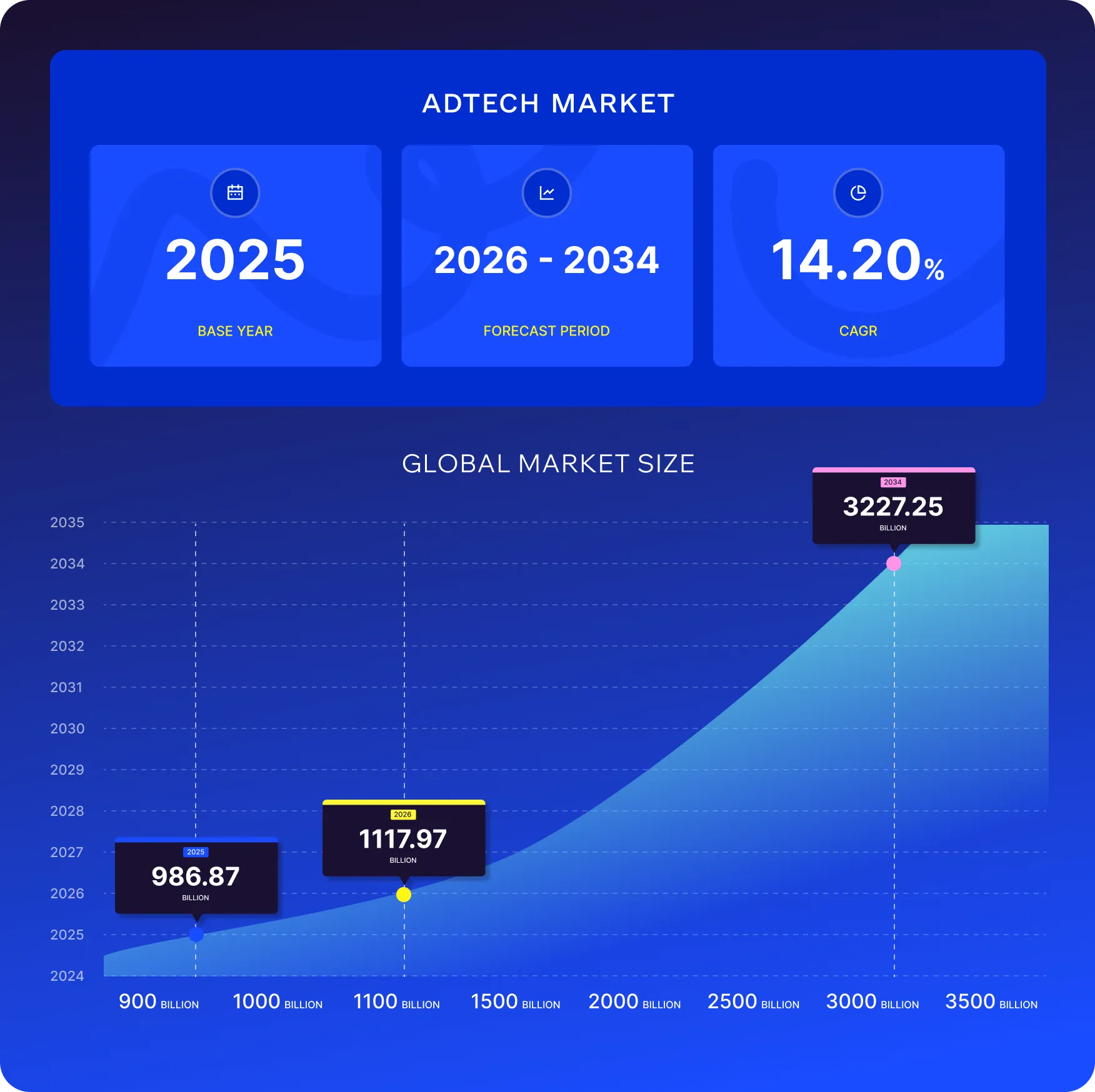 Source: Fortune Business Insights
For instance, media owners are often limited by rising costs, privacy changes, and commoditized SSP deals, so they search for greater control over their AdTech and margins. Solving the disadvantages of development from scratch, white-label solutions enable publishers to enhance their monetization strategy in the shortest time possible – these are pre-built platforms (e.g., white‑label SSP / white‑label ad server) that can be branded and configured as publishers’ own solutions.
Working with white-label AdTech since 2018, Attekmi has enabled over 200 businesses to monetize with greater efficiency while minimizing expenses. Relying on the experience we have gained over the years, as well as the deep understanding of the challenges publishers face (cookie deprecation, SPO, consolidation, pressure from walled gardens, etc.), we have prepared this guide explaining how you can increase your income with a white-label solution. Read on to discover how you can strengthen your publisher monetization strategy.
What “white‑label AdTech” means for publishers
White-label AdTech allows publishers to operate monetization infrastructure under their own brand instead of relying on third-party platforms. Rather than sending all your inventory through external SSPs or marketplaces with limited transparency, you can configure your own environment and unlock greater control over your monetization operations.
White‑label SSP, ad exchange, and ad server – who owns what
An SSP (supply-side platform) enables publishers to sell their ad inventory programmatically. An ad exchange acts as an intermediary between an SSP and a DSP (demand-side platform) – this is where programmatic auctions take place. An ad server is responsible for ad delivery, storing advertising content, gathering statistical data, etc.
In classic setups, publishers access these technologies via third-party vendors that fully control the infrastructure. Basically, you are a client within someone else’s ecosystem. White-label technology changes this.
For example, by using a white-label SSP, you decide how auctions are prioritized and what fee structure is applied. With a white-label ad exchange, you establish your own marketplace logic. In turn, a white-label ad server provides you with greater flexibility over delivery rules.
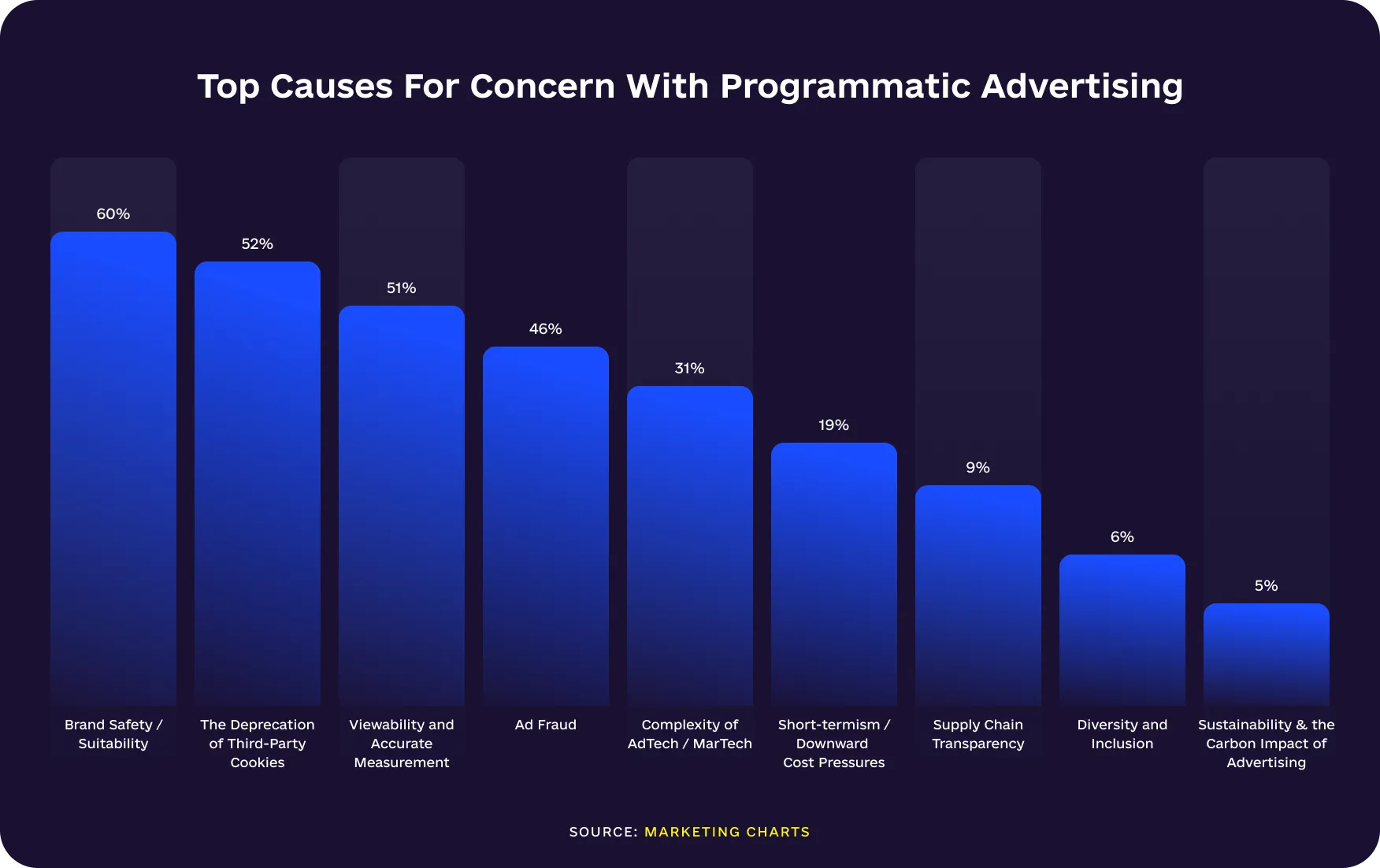
Note that white-label does not mean that you need to build a platform from the ground up. You use a pre-built solution (like the one offered by Attekmi) and configure UI, business rules, and integrations. This way, a white‑label programmatic advertising platform can be launched virtually in no time. Everything depends on the required level of customization, but from our experience, this usually takes just a few weeks. In turn, building an AdTech solution from scratch can take months or even years. The complexity of AdTech and MarTech is among the top five causes for concerns with programmatic advertising (chosen by 31% of programmatic experts). This complexity is exactly why the development of such platforms is so resource-intensive.
Why publishers consider white‑label instead of just adding more SSPs
Many media owners initially try to increase monetization by connecting additional SSPs. While such an approach may help expand bid density, it does not solve all the inefficiencies.
One major limitation is fee opacity. In standard SSP relationships, you often have limited visibility into how much revenue is retained across the supply chain. There may be multiple intermediaries involved, so understanding auction economics clearly can be challenging, as well as finding out where margin leakage happens.
Another challenge is restricted auction visibility, as you often cannot fully control auction logic, bid prioritization, data usage policies, and so on. Besides, the priorities of external platforms may not align with your revenue goals.
Differentiation also becomes difficult, as many publishers rely on very similar monetization stacks. If competitors use the same SSPs, exchanges, targeting logic, and optimization tools, it becomes much harder to create special inventory offers or develop unique monetization advantages.
White-label AdTech addresses these limitations by providing publishers with greater control over the monetization process. For instance, you can influence fee structures, determine which demand partners participate in auctions, apply custom logic, and gain deeper insights into performance and revenue flows. Additionally, since privacy regulations keep getting stricter, publishers are focusing on first-party data and increasingly prioritizing solutions that allow them to manage data directly instead of relying on third-party platforms.
How can publishers increase revenue with white‑label AdTech?
Adopting the following strategies is a way to monetize effectively with a white-label programmatic infrastructure for publishers:
Finding a trusted white-label AdTech provider and launching your solution – obviously, this is the first step that you need to take.
Packaging your inventory – focusing on specific niches can help attract higher CPMs.
Reducing supply-path inefficiencies – as you minimize hidden fees, your income grows.
Optimizing your yield – this becomes possible thanks to greater visibility and control.
Accessing better demand – you can do this, for instance, by improving traffic quality.
Strategy 1: launching a publisher‑owned ad exchange or SSP
The first thing to do is to find an AdTech provider offering a white-label solution you are in search of.
Finding the right AdTech partner
Pay attention to the following criteria when comparing different vendors:
The range of available features.
The frequency of platform upgrades.
Customization opportunities.
Supported formats and environments.
Supported integrations.
Analytics capabilities.
Compliance with privacy regulations.
Support service quality.
Onboarding.
It would be also helpful to search for reviews on credible third-party platforms like G2 or Clutch.
How Attekmi supports a publisher‑owned exchange
If you are looking for a white-label AdTech solution, Attekmi is the best fit, and here is why:
Banner, audio, video, native, and CTV formats.
Desktop, in-app, mobile web, and CTV environments.
US East, APAC, and EU.
A variety of filtering and targeting settings for maximizing the performance
A variety of connection types (RTB, VAST, JS Prebid Server, etc.), including cross-bidding integration capabilities (e.g., VAST to RTB).
Demand Booster, Adaptive Margin, and Range Margin functions for increasing your income.
Analytics Dashboards, Alerts, and Scheduled Reports for effective performance monitoring.
An opportunity to integrate a range of traffic and demand scanners (Pixalate, Protected Media, etc.).
Full compliance with GDPR, CCPA, and other regulations.
Support for ads.txt and sellers.json.
Regular platform upgrades according to partners’ feedback.
Comprehensive onboarding and proactive support.
An individual approach to every client.
Most importantly, Attekmi’s white-label solution offers unique customization opportunities. Apart from UI personalization, you can count on custom on-request feature development. This way, it becomes easier for you to gain and maintain a competitive advantage.
Additionally, our platform is designed to grow together with your business. One of our partners entered the market in one week and gradually reached 200k QPS (within one year). Profit growth exceeded 87%.
The key income levers that helped our client achieve such results were continuous partner optimization, the right selection of the payment model, and integration of several scanners that secured the system and made it more attractive for the demand side.
Note that we also offer a white-label ad server solution, as well as a wide range of services, including custom AdTech development. This way, we are ready to meet any of your AdTech needs.
Revenue scenarios and risks
Note that white-label AdTech solutions can generate revenue through multiple models. For instance, the platform may retain a margin from transactions flowing through it. Alternatively, businesses that connect to your platform may pay for access to it. A hybrid structure combines different approaches.
You should also be aware of the following risks and responsibilities:
You may need stronger operational maturity to manage your solution effectively.
Running such a solution involves finding and managing the partners – this is a continuous process.
Compliance becomes increasingly important, as well as security. Fortunately, with Attekmi, ensuring compliance and minimizing fraud risks becomes a much easier task.
Strategy 2: packaging inventory into niche or vertical marketplaces
White-label AdTech provides you with freedom of action, so consider focusing on something specific instead of relying only on scale. This can help you stand out from the crowd.
Why niche marketplaces earn better than generic inventory
Niche marketplaces often deliver greater results than generic ones because they organize inventory around clear contextual or audience identity. For example, if your website publishes local news, the solution you operate may focus on regional advertisers who are in search of geographically relevant reach.
Such environments offer more contextual alignment and audience relevance, so marketers are often willing to pay more for niche inventory. Besides, as a platform owner, you can maintain unified standards for quality, fraud prevention, auction rules, etc. This will make your platform even more competitive.
Attekmi‑style examples of vertical marketplaces
Here are several more examples of niche marketplaces:
A retail media marketplace offering e-commerce inventory and shopper audiences.
A marketplace focusing on car buyers and auto enthusiasts will be attractive for manufacturers and insurance companies.
A travel marketplace can drive demand from advertisers in hospitality, insurance, airlines, and luggage brands.
What common patterns may they have in terms of reaching success? From our experience, these can be improving supply-path efficiency, utilizing first-party data, minimizing fraud, and leveraging dynamic floor pricing.
Consider choosing a relevant niche – then you will be able to start searching for partners, setting rules, and configuring the solution.
Practical steps for publishers
Step 1: Identify a vertical or audience segment where you have strong content and demand interest. Strong options often include sports, healthcare, gaming, and finance, but everything depends on the content you create.
Step 2: Model expected demand and fee structure. This will help you decide if focusing on a specific niche is actually a good idea.
Step 3: Use a white-label solution (like the one offered by Attekmi) to create a dedicated system aligned with your monetization strategy.
Strategy 3: reducing supply-path inefficiencies to keep more revenue
One of the biggest challenges of the modern programmatic ecosystem is that it is complex, and this complexity keeps increasing. Supply chains often involve loads of intermediaries, and each of them takes a fee.
Why long supply paths reduce your revenue
The problem is that a significant part of advertiser spend may never reach you directly – it will be taken by intermediaries. Besides, longer supply paths often lead to duplicate bid requests, lower auction transparency, and increased latency. In turn, advertisers are increasingly adopting the supply path optimization practices, so publishers who are able to ensure transparent and clean paths gain an opportunity to attract premium buyers and higher pricing.
How white-label infrastructure can help
White-label AdTech infrastructure provides you with greater control over the inventory flows. For instance, you may eliminate unnecessary resellers and other intermediaries, prioritize high-quality traffic, apply custom floor pricing, and so on.
Such a level of control will help you minimize inefficiencies and optimize your monetization strategy. Additionally, you will access improved visibility.
Revenue impact of cleaner supply paths
First and foremost, you retain a larger share of advertiser spend. Secondly, you build trust, which helps you attract media buyers and ensure greater bid density. Thirdly, you can count on improved operational efficiency. Over time, cleaner supply paths can ensure higher revenue and more stable monetization.
Strategy 4: optimizing yield with more control over demand, data, and deals
White-label AdTech infrastructure provides you with enhanced control over your monetization processes, and increased transparency is not the only benefit in terms of revenue optimization.
Owning fee and margin structures
You are the one responsible for setting fees and margins, so you can create an active optimization strategy instead of relying on third-party platforms’ mechanisms. Besides, some white-label solutions are equipped with features for income optimization. For instance, Attekmi’s platform has the Adaptive Margin capability – it automatically calculates the most optimal margin (based on recommended markups taken from the most successful trades that happened within 24 hours).
Smarter partner mix: how many demand partners is too many?
Connecting with loads of partners is not always a good idea. This may lead to auction duplication, higher latency, greater reporting fragmentation, etc. The overall efficiency may decrease. However, since you are in control of the platform, you can continuously refine partner participation and prioritize those who deliver the best results.
For instance, Attekmi’s solution offers a wide range of filtering settings: allowed and blocked lists, maximum accepted bidfloors, limit by IAB sub-categories, and more. By experimenting with these settings, you can identify the top-performing partners.
Using first-party data as a way to maximize revenue
Since third-party targeting becomes less reliable, first-party data is turning into one of the most valuable monetization assets. By understanding your audience and applying Attekmi’s filtering and targeting capabilities, you can create value that a generic SSP will not be able to offer.
Strategy 5: improving traffic quality and compliance to unlock better demand
Monetization efficiency depends not only on the traffic volume – the quality of traffic is a much more important factor. White-label AdTech helps you gain greater control of the quality, which, in turn, will help you drive higher income.
Why better quality controls → better bids
Ad fraud still remains an issue in programmatic advertising, so media buyers prioritize transparent and low-risk environments. You should meet these expectations. With a white-label solution, you can enforce stricter quality control, which will lead to stronger monetization outcomes. Advertisers often pay more when the inventory origin is transparent, fraud exposure is lower, and supply paths are easier to verify.
Using Attekmi’s fraud and traffic‑filtering tools
Attekmi’s traffic filtering features can help you create a safer ecosystem, but using them is not the only thing that you can do. Additionally, you can integrate a variety of scanners: Pixalate, Forensiq, ClearTrust, HUMAN Security, and others. In addition, our solution supports ads.txt and sellers.json files.
What can you achieve by applying these features? Better trust and greater access to premium budgets.
GDPR/CCPA‑aware monetization patterns
Privacy regulations keep getting stricter, and neglecting them can lead to significant fines. Frameworks like GDPR and CCPA require publishers and AdTech platforms to manage consent, data processing, and user privacy more carefully. With a white-label infrastructure, this task gets a bit easier.
While you still need your own legal and policy guidance, Attekmi’s solution is already compliant with GDPR, CCPA, COPPA, and TCF 2.0. In combination with filtering mechanisms, this gives you an opportunity to build trust more effectively and monetize in a compliant manner.
Implementation roadmaps – how publishers phase in white‑label AdTech
Successful implementations are phased in gradually – to minimize risks, you first need to test and optimize everything.
Start small
After you choose and launch your white-label solution, start with a highly controlled setup – for instance, a limited segment of your inventory. Key KPIs to track usually include net revenue, fill rate, CPM, latency, and operations load.
Note that you do not need to outperform every SSP or ad exchange straight away. Starting small enables you to create a long-term monetization advantage.
Scale gradually
After you confirm the effectiveness of your initial setup, start scaling. This may involve offering more inventory, adding more partners, etc. This way, your platform will turn into a larger ecosystem.
Make sure not to hurry. For instance, the partners of Attekmi increase QPS volume steadily. They start with, let’s say, 20k, then scale to 30k, then to 40k, and so on. You should follow the same approach – you need stable growth, not a short-term performance spike.
Build long‑term moats: data, relationships, and product
One of the strongest advantages of white-label AdTech is that you gradually accumulate assets that are difficult for your competitors to replicate: data, relationships with advertisers and other industry participants, and so on.
Therefore, build your own datasets around inventory performance, buyer activity patterns, pricing dynamics, audience behavior, etc. Additionally, strengthen relationships with your partners by proving the quality of your inventory, ensuring security, and helping them achieve their goals in an effective manner.
Conclusion
Now you know how publishers increase revenue with white‑label AdTech. There is a range of strategies to apply and experiment with – remember that long-term efficiency should be your priority. While quick results may look good, you need a stable income in the long run, and the approaches described here will help you achieve this.
Keep in mind that Attekmi’s white-label solution is ready to meet all your monetization needs. While it is already equipped with all the essential capabilities, you can request additional features, so that the platform will be fully tailored to your requirements.
Ready to start your own ad exchange / marketplace? Or maybe an SSP? Contact us.
FAQ
Publishers can reduce technical risk by adopting white-label AdTech gradually instead of replacing their entire monetization stack at once. Start small, test the performance, optimize the settings, and scale incrementally.
No. White-label solutions are pre-built, and the provider team is often responsible for all the customizations and platform maintenance. A small Ad Ops team is usually enough to begin with.
Yes. Many publishers integrate white-label infrastructure alongside their existing systems. The white-label layer can work as an additional monetization environment, or you can switch to it completely after confirming its effectiveness.
From our experience, this can take a few weeks or even less. Even though everything depends on the requirements, launching a white-label AdTech solution is a much faster process than developing such a platform fully from scratch.
White-label AdTech can benefit publishers of different sizes. However, the strongest advantages usually appear for media owners with large traffic volumes or smaller publishers operating in specific niches.


'%3e%3cpath%20d='M415.5%20380.133C415.5%20554.655%20911.5%20609.133%20714%20818.633C447%20850.133%20200%20677.655%20200%20503.133C200%20328.611%20341.478%20187.133%20516%20187.133C690.522%20187.133%20415.5%20205.611%20415.5%20380.133Z'%20fill='%231A4CFF'/%3e%3c/g%3e%3cg%20filter='url(%23filter1_f_654_7533)'%3e%3cpath%20d='M819.862%20539.146C969.42%20389.588%20963.912%20273.412%201000.6%20310.096C1037.28%20346.78%201059.92%20590.588%20910.362%20740.146C760.804%20889.704%20503.861%20847.646%20447.362%20760.146C348.862%20547.146%20670.304%20688.704%20819.862%20539.146Z'%20fill='%23052AAE'/%3e%3c/g%3e%3cg%20filter='url(%23filter2_f_654_7533)'%3e%3cpath%20d='M647.331%20285.725C443.031%20230.983%20408.998%20311.131%20358.6%20243.729C295.498%20194.631%20571.852%2052.1078%20776.152%20106.85C980.452%20161.592%201072.5%20405.139%201024.97%20497.82C889.759%20689.623%20851.631%20340.467%20647.331%20285.725Z'%20fill='%231B4DFF'/%3e%3c/g%3e%3c/g%3e%3cdefs%3e%3cfilter%20id='filter0_f_654_7533'%20x='0'%20y='-12.8672'%20width='960.465'%20height='1035.25'%20filterUnits='userSpaceOnUse'%20color-interpolation-filters='sRGB'%3e%3cfeFlood%20flood-opacity='0'%20result='BackgroundImageFix'/%3e%3cfeBlend%20mode='normal'%20in='SourceGraphic'%20in2='BackgroundImageFix'%20result='shape'/%3e%3cfeGaussianBlur%20stdDeviation='100'%20result='effect1_foregroundBlur_654_7533'/%3e%3c/filter%3e%3cfilter%20id='filter1_f_654_7533'%20x='228.938'%20y='103.27'%20width='998.816'%20height='935.965'%20filterUnits='userSpaceOnUse'%20color-interpolation-filters='sRGB'%3e%3cfeFlood%20flood-opacity='0'%20result='BackgroundImageFix'/%3e%3cfeBlend%20mode='normal'%20in='SourceGraphic'%20in2='BackgroundImageFix'%20result='shape'/%3e%3cfeGaussianBlur%20stdDeviation='100'%20result='effect1_foregroundBlur_654_7533'/%3e%3c/filter%3e%3cfilter%20id='filter2_f_654_7533'%20x='149.441'%20y='-105.473'%20width='1087.81'%20height='860.301'%20filterUnits='userSpaceOnUse'%20color-interpolation-filters='sRGB'%3e%3cfeFlood%20flood-opacity='0'%20result='BackgroundImageFix'/%3e%3cfeBlend%20mode='normal'%20in='SourceGraphic'%20in2='BackgroundImageFix'%20result='shape'/%3e%3cfeGaussianBlur%20stdDeviation='100'%20result='effect1_foregroundBlur_654_7533'/%3e%3c/filter%3e%3c/defs%3e%3c/svg%3e)