Collecting first-party data is a must in the modern privacy-centric advertising ecosystem. This approach enables marketers to ensure precise targeting while respecting user privacy and remaining compliant with international regulations.
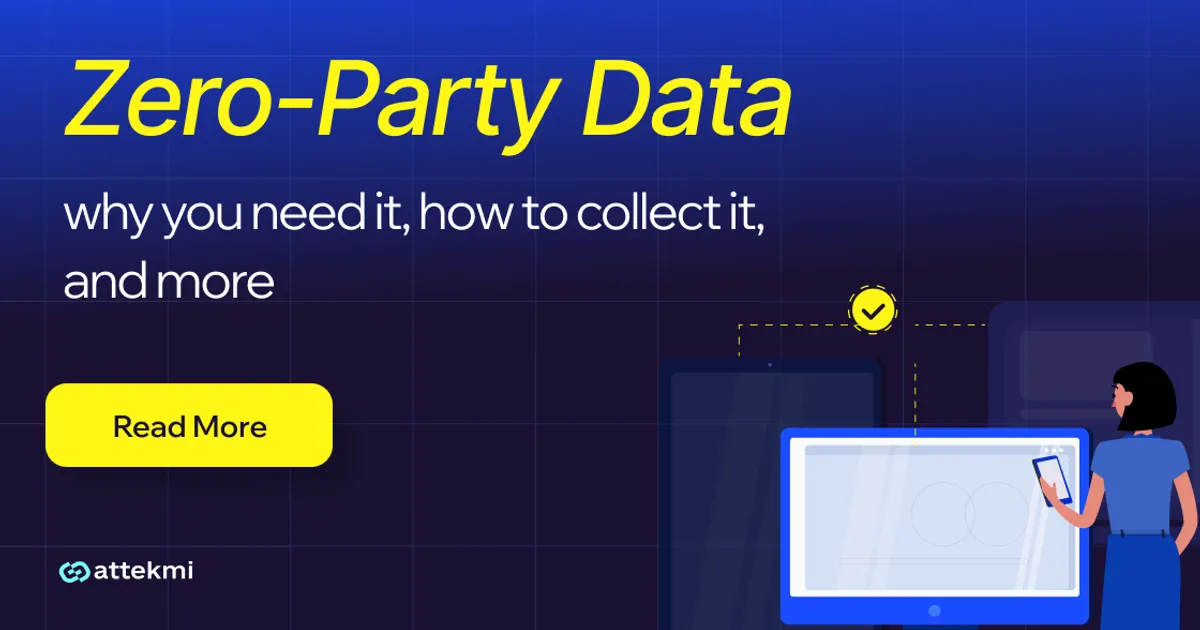
But what about zero-party data? How different is it from the other data types? What are its benefits? How to collect it? To help you optimize your strategy and achieve your goals, we prepared a detailed guide on zero-party data. It answers all the questions listed above, and not only. Read on to learn more.
Key Takeaways:
Zero-party data is the most valuable type of data as customers share it willingly.
Since the advertising ecosystem is getting more and more privacy-centric, switching to zero-party and first-party data becomes a must.
Collecting zero-party data is a way to build trust effectively and ensure ultimate personalization.
Zero-party data strategies require continuous optimization – new incentives, new survey questions, etc.
What is zero-party data?
Let’s start with the basics – the definition of zero-party data and a brief overview of collection methods.
Zero-party data definition
Zero-party data is information that customers share with your business willingly. It may include preference data, purchase intentions, interests, etc. Such data is shared intentionally, and customers usually expect a better experience in return: greater personalization, more relevant content and product recommendations, exclusive offers, and so on.
How zero-party data is collected
Zero-party data is gathered through direct interactions: via quizzes, polls, surveys, feedback forms, social media engagement, optional questions during the onboarding process, etc. So far, you may think that zero-party data is pretty similar to first-party data; however, there are certain differences – we will review them right in the next section.
Zero-party data vs other data types
So, here are the key differences that you should be aware of.
Zero-party data vs first-party data
Both first- and zero-party data is collected directly from your customers. However, first-party data is gathered via the channels you own: your website, app, etc. Yes, surveys are often mentioned as a popular method for first-party data collection, but actually, the information you gather like this is not first-party. It is zero-party.
Zero-Party | First-Party | |
Source | Directly from users | Directly through your owned channels and sources |
Ownership | Owned by your brand | Owned by your brand |
Consent | Explicit | In general, businesses are required to obtain explicit consent |
Accuracy | Very high | High |
User awareness | Fully intentional | May be passive |
Examples | A user selects preferred content topics on your website | Purchase history, website behavior, app engagement, email engagement, etc. |
Zero-party data vs second-party data
Second-party data is the first-party data collected by a different brand and then shared with yours. It can help you fill in the gaps in your own data, but unfortunately, you cannot guarantee data quality and accuracy.
Zero-Party | Second-Party | |
User relationship | Direct | Indirect |
Ownership | Owned by your brand | Owned by your partner |
Privacy control | Full | Shared |
Accuracy | Very high | Depends on the partner |
Risk level | Very low | Medium |
Examples | A user specifies their goals in a fitness app (this step is not required for using the application) | The same as for first-party data – it is just collected by a different business |
Zero-party data vs third-party data
Third-party data is the information collected by companies that have no direct relationships with the customers. Providers create large data sets and then sell them to brands for advertising and marketing activities. However, since the third-party data is collected from multiple sources, it often lacks accuracy. Other disadvantages include privacy risks and potential compliance issues.
Zero-Party | Third-Party | |
Source | Directly from users | External data providers |
Transparency | High | Low |
Privacy compliance | Strong | Increasingly restricted |
Exclusivity | Exclusive | Shared across multiple buyers |
Long-term viability | High | Declining |
Examples | A customer proactively shares their feedback on your product | A furniture company buys data on the residents of a new apartment complex to offer discounts |
As you can see, third-party data is the source that you should not rely on. Second-party data can be used sometimes, but you should choose partners carefully. First-party information can help you drive impressive results, but it introduces certain challenges. It may lack context. It may be hard to interpret. Achieving a unified customer view can be complicated. These are just several examples.
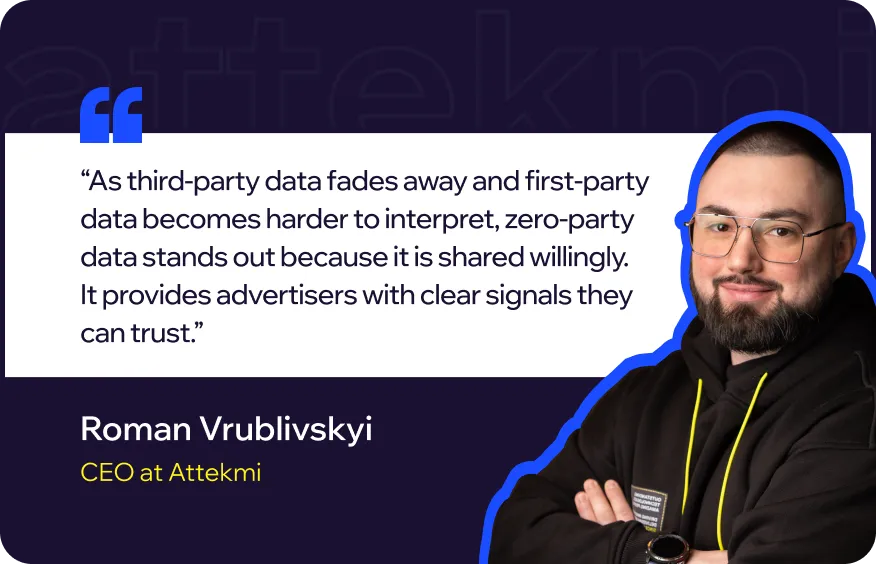
Considering this, zero-party data is the most accurate and valuable type of information you can collect.
Benefits of zero-party data for businesses
Now, let’s dive deeper into the advantages of zero-party data.
Higher data accuracy and relevance
That is the most important benefit – zero-party data is shared by customers explicitly and willingly. They state their preferences, interests, or intent clearly. Therefore, this type of data is highly accurate, relevant, and ready for immediate marketing and product decisions.
Improved personalization and customer experience
With zero-party data, you do not have to rely on assumptions. You personalize the customer experience based on what users really want. This enables more relevant and effective product recommendations, messaging, and offers across a variety of channels. As a result, you achieve greater engagement, higher conversion rates, and long-term loyalty.
Stronger trust and transparency
Zero-party data is gathered through open and transparent interactions, which helps build trust and strengthen the relationships between customers and your company. Instead of simply tracking your users, you create a value-based offer. Customers know what data is collected and how it is used – in return, they receive more personalized experiences or, for instance, a discount.
Better compliance with privacy laws
Zero-party data is shared voluntarily and with clear consent, which aligns with global privacy regulations. As a result, you minimize legal risks and remain compliant in an increasingly regulated digital advertising ecosystem.
Importance in a cookieless world
As third-party cookies are fading away, zero-party data becomes a future-proof alternative. It can become your solid foundation for targeting and personalization.
Higher efficiency of marketing spend
With clearer intent signals and fewer wasted impressions, zero-party data can help you optimize the campaigns and reduce inefficiencies. Your advertising efforts will become more focused, which will have a positive impact on ROI.
Common zero-party data collection methods
So, how to collect zero-party data? Here are the methods you can try.
Surveys and questionnaires
Creating a survey or a questionnaire allows you to directly ask your customers about their needs, interests, preferences, etc. When kept short and relevant, it can provide you with high-quality insights.
Preference centers
Preference centers enable users to actively manage what data they share and how they want to be contacted. This method gives customers control over their interests, communication frequency, and content types, which increases trust and data accuracy.
Interactive content and quizzes
Quizzes, assessments, and interactive tools collect zero-party data in an engaging way. Users are more likely to share information when they receive personalized results, recommendations, or insights in return.
Forms, polls, and feedback widgets
Simple forms, polls, and on-site feedback widgets capture real-time opinions and intent signals. These interactions work well for gathering contextual insights without interrupting the user experience.
Onboarding flows
During sign-up or onboarding, users can voluntarily provide information such as goals, interests, or usage preferences. This data can help you personalize experiences from the very first interaction.
Zero-party data use cases and examples
Here are some zero-party data examples and use cases to provide you with an even better understanding of its benefits.
Ecommerce personalization examples
In ecommerce, zero-party data is commonly collected through style quizzes, size selectors, wish lists, and preference profiles. This data helps brands personalize product recommendations, promotions, and on-site experiences, which reduces product discovery time, improves conversion rates, and lowers return rates.
Marketing and advertising use cases
Marketers use zero-party data to tailor messaging, creative formats, and offers based on specified interests or intent. Instead of relying on assumptions, advertisers can activate consent-based signals across email, paid media, and owned channels. This results in higher engagement and more efficient campaign performance.
SaaS examples
SaaS companies usually collect zero-party data during onboarding by asking users about their goals, roles, or use cases. This enables personalized product tours, feature recommendations, and messaging. Such an approach allows for reducing churn rate and increasing customer lifetime value.
Financial services and FinTech examples
Zero-party data can be gathered through financial goal assessments, risk preference questionnaires, etc. This data allows banks and FinTech platforms to offer tailored product recommendations, educational content, and personalized financial insights while maintaining strong compliance and transparency.
Media and content platforms
Media companies tend to allow users to select content topics, formats, or notification preferences. This helps platforms deliver more relevant content feeds, improve subscriber retention, and, obviously, reduce reliance on third-party tracking technologies.
Zero-party data in marketing strategy
In short, zero-party data can help you remain competitive in the market. Now, let’s explore how you can apply it.
Personalized email and messaging campaigns
Zero-party data enables you to tailor email and messaging based on stated preferences, interests, and communication choices. This leads to more relevant subject lines, content, and offers, improving open rates, click-through rates, and overall engagement while reducing message fatigue.
Customer journey optimization
By collecting zero-party data at key touchpoints, you can better understand customer intent at each stage of the journey. This helps you deliver the right message, content, or incentive at the right time, creating smoother experiences across channels.
Audience segmentation and targeting
Zero-party data enables highly precise segmentation based on provided factors, such as needs, goals, or purchase intent. These segments can be activated across owned and paid channels, ensuring privacy-safe targeting without relying on third-party cookies or probabilistic identifiers.
Cross-channel consistency
Because zero-party data is collected directly and with consent, it can be safely unified across channels. This helps you maintain consistent messaging and personalization across email, web, in-app, and customer support interactions.
How to implement a zero-party data strategy?
Here is a step-by-step guide on implementing a zero-party data strategy.
Define data goals and use cases
Start by clearly identifying what you want to achieve with zero-party data. This may include improving personalization, optimizing campaigns, enhancing onboarding, increasing retention, etc. Clear objectives help determine what data to collect and prevent over-collection that can affect trust.
Choose the right data collection touchpoints
Identify moments in the customer journey where users are most willing to share information. For instance, this can be the onboarding process. Selecting the right timing and context is critical to maximize participation.
Encourage data sharing
Encourage users to share data by offering clear value in return, such as personalized recommendations, exclusive content, discounts, or improved experiences. Clearly explain how the data will be used and keep the process simple.
Ensure transparency and consent
Be explicit about what data is collected, why you need it, and how it will be used. Providing clear consent options and easy-to-manage preferences helps build trust and ensures alignment with privacy regulations.
Activate and analyze the data
Integrate zero-party data into your marketing, CRM (customer relationship management), or CDP (customer data platform) systems to activate it across campaigns and channels. Continuously analyze performance to understand how zero-party data impacts engagement, conversion, and retention, and refine your strategy accordingly.
Keep your strategy effective
Zero-party data strategies should be dynamic. Regularly update questions, refresh incentives, and adjust use cases as customer needs and business goals evolve.
Conclusion
Collecting first-party data is important, but zero-party data is the most valuable information that an individual can share with your brand. With the recommendations provided above, you can now start to collect zero-party data and integrate it into your strategy effectively. Since the advertising ecosystem is getting more and more privacy-centric, this is a crucial step for you to take in order to remain competitive.
By the way, at Attekmi, we offer custom development services. Therefore, if you need a data management platform, a customer data platform, or any other AdTech solution, our team is ready to bring your project to life. Operating in the industry since 2018, we have all the essential skills and knowledge to help your business grow.
Does Attekmi look like the right choice? Let’s talk.
FAQ
Businesses collect zero-party data through direct, voluntary interactions with users, such as surveys, preference centers, quizzes, onboarding forms, and feedback tools. Customers intentionally share information in exchange for personalized experiences, recommendations, or exclusive offers.
A common example is a product recommendation quiz where users select their preferences, goals, or needs. The answers are explicitly provided by the customer and used to personalize content, offers, or product suggestions.
Yes, surveys can be a source of zero-party data – provided users knowingly and willingly share information. When survey responses are collected transparently and used as stated, they qualify as zero-party data.


'%3e%3cpath%20d='M415.5%20380.133C415.5%20554.655%20911.5%20609.133%20714%20818.633C447%20850.133%20200%20677.655%20200%20503.133C200%20328.611%20341.478%20187.133%20516%20187.133C690.522%20187.133%20415.5%20205.611%20415.5%20380.133Z'%20fill='%231A4CFF'/%3e%3c/g%3e%3cg%20filter='url(%23filter1_f_654_7533)'%3e%3cpath%20d='M819.862%20539.146C969.42%20389.588%20963.912%20273.412%201000.6%20310.096C1037.28%20346.78%201059.92%20590.588%20910.362%20740.146C760.804%20889.704%20503.861%20847.646%20447.362%20760.146C348.862%20547.146%20670.304%20688.704%20819.862%20539.146Z'%20fill='%23052AAE'/%3e%3c/g%3e%3cg%20filter='url(%23filter2_f_654_7533)'%3e%3cpath%20d='M647.331%20285.725C443.031%20230.983%20408.998%20311.131%20358.6%20243.729C295.498%20194.631%20571.852%2052.1078%20776.152%20106.85C980.452%20161.592%201072.5%20405.139%201024.97%20497.82C889.759%20689.623%20851.631%20340.467%20647.331%20285.725Z'%20fill='%231B4DFF'/%3e%3c/g%3e%3c/g%3e%3cdefs%3e%3cfilter%20id='filter0_f_654_7533'%20x='0'%20y='-12.8672'%20width='960.465'%20height='1035.25'%20filterUnits='userSpaceOnUse'%20color-interpolation-filters='sRGB'%3e%3cfeFlood%20flood-opacity='0'%20result='BackgroundImageFix'/%3e%3cfeBlend%20mode='normal'%20in='SourceGraphic'%20in2='BackgroundImageFix'%20result='shape'/%3e%3cfeGaussianBlur%20stdDeviation='100'%20result='effect1_foregroundBlur_654_7533'/%3e%3c/filter%3e%3cfilter%20id='filter1_f_654_7533'%20x='228.938'%20y='103.27'%20width='998.816'%20height='935.965'%20filterUnits='userSpaceOnUse'%20color-interpolation-filters='sRGB'%3e%3cfeFlood%20flood-opacity='0'%20result='BackgroundImageFix'/%3e%3cfeBlend%20mode='normal'%20in='SourceGraphic'%20in2='BackgroundImageFix'%20result='shape'/%3e%3cfeGaussianBlur%20stdDeviation='100'%20result='effect1_foregroundBlur_654_7533'/%3e%3c/filter%3e%3cfilter%20id='filter2_f_654_7533'%20x='149.441'%20y='-105.473'%20width='1087.81'%20height='860.301'%20filterUnits='userSpaceOnUse'%20color-interpolation-filters='sRGB'%3e%3cfeFlood%20flood-opacity='0'%20result='BackgroundImageFix'/%3e%3cfeBlend%20mode='normal'%20in='SourceGraphic'%20in2='BackgroundImageFix'%20result='shape'/%3e%3cfeGaussianBlur%20stdDeviation='100'%20result='effect1_foregroundBlur_654_7533'/%3e%3c/filter%3e%3c/defs%3e%3c/svg%3e)