Ad formats define how ads are structured and presented; choosing the right formats is critical for both campaign success and platform monetization.
The most profitable ad format examples include in-app video ads (playable, rewarded, interstitial), native video, and CTV ads, all offering high engagement and revenue potential.
Display banner ads, pop, and push ads remain widely used for their accessibility, although they may face challenges like banner blindness or ad blockers.
Rich media ads and mobile formats enable interactive experiences but require more creative input and design consideration.
With Attekmi’s white-label solutions, all major ad formats come pre-integrated, allowing fast go-to-market and simplified ad size configuration for demand partners.
Organizing an ad exchange implies making multiple decisions, and one of them is selecting the types of ad formats you will offer to your SSP and DSP partners (learn more about the differences between DSP vs SSP). The same applies to advertisers – they need to choose the right formats and sizes for their campaigns.
With so many options available, making a choice can be a challenging task, but our guide is here to help. What are the most profitable online advertising formats? In short, these are display, video, and other ads. However, they can take different forms. Read on to discover the best digital ad formats that pay the most.
What is ad format?
The definition of ad format is pretty straightforward – it is the specific design, structure, and layout of a digital ad. It is about how the marketing content is arranged and delivered to the users.
The choice of a format highly depends on the campaign goals. For example, display ads are effective for increasing brand visibility. However, if you are an owner of an ad exchange platform, you should offer multiple online ad formats to your partners. In this way, you will have more opportunities to earn on media trading.
Key factors driving profitability
What are the factors and trends influencing the profitability of an advertising format? Here are several things to keep in mind:
Since attention is becoming a new currency in advertising, formats that drive it most effectively (like, for instance, CTV ads) are in greater demand than others.
Formats that support greater interactivity and provide deeper engagement outperform simpler advertisements. For instance, these can be shoppable or playable ads.
Formats that are less prone to fraud are more profitable as well. For example, even though CTV ads are not completely immune to fraud, they are still slightly safer than many other formats.
Formats that ensure more effective measurement drive greater profits since their performance is easier to verify.
CTV ads are gaining momentum since viewers are increasingly switching from linear TV to streaming platforms.
Since regulations are getting stricter, more privacy-friendly formats (like native ads) are becoming more popular.
Display ad formats
In general, the more advertising formats you offer to your partners, the better. A greater freedom of choice can motivate them to choose exactly your ad exchange. However, certain digital ad formats are virtually a must, and marketers should also consider them. Obviously, display ads are on the list.
Display banner ads
Display banner ads are static images (equipped with text and a URL) that can be added to a header, footer, or other parts of the website. They can come in different sizes:
300x250: one of the most universal options
336x280: provides enough space for both visual and text components
728x90: high visibility
160x600: perfect for sidebars
The more traffic a website receives, the more effective display banner ads are. Therefore, consider setting a minimum traffic requirement for your SSP partners. However, advertisers need to remember that many users have so-called banner blindness, so it is important to prepare creative and personalized ads.
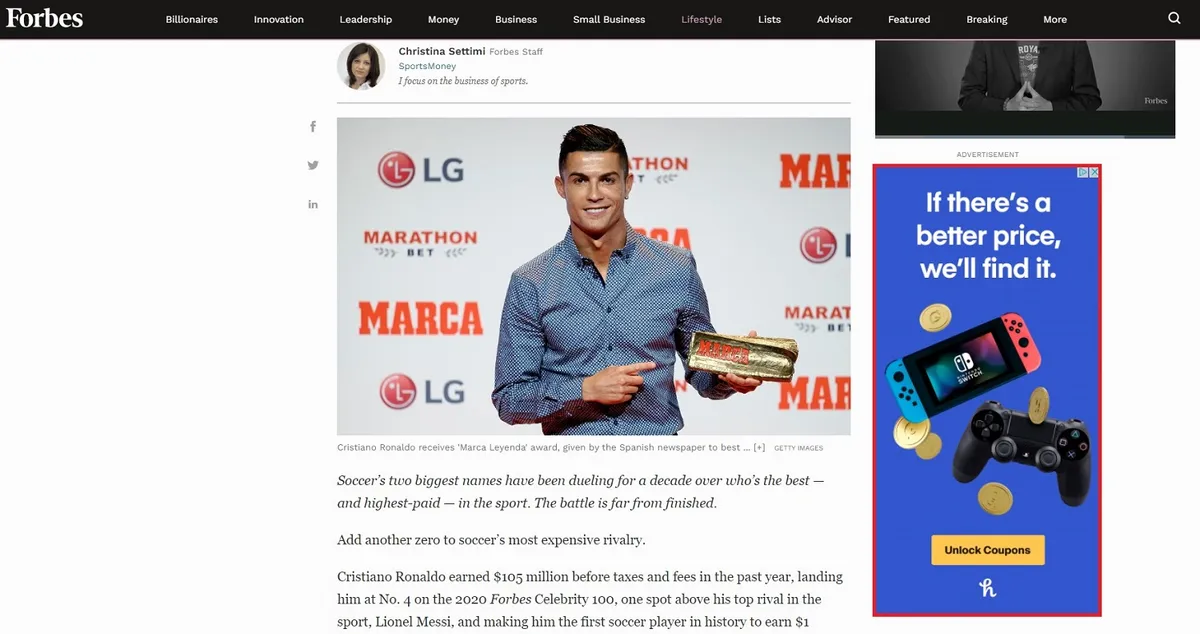
As for the ad format examples, here is one. A display banner ad is located on the right, in the upper part of the website, so visitors can see it without even scrolling.
Pop ads
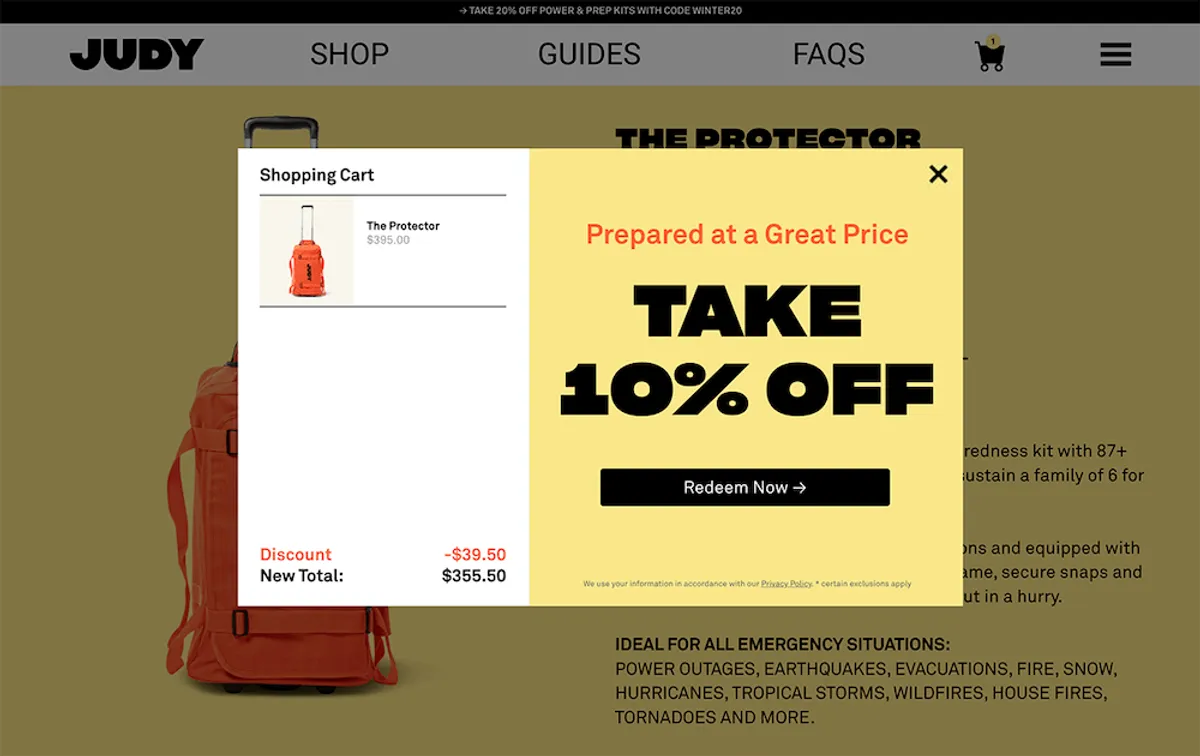
Pop ads, also known as pop-up ads, are images that pop up over the content of the page. They are very effective in terms of attracting attention since users do not have to go through the content before interacting with an ad (like it may happen with banners).
Due to this, pop-up ads can help you increase income. Besides, they often cost less than other formats of advertising, meaning that they are likely to be in high demand among your DSP partners. At the same time, advertisers should remember that a lot of people use ad-blocking software, so it may be challenging for pop-up ads to reach the audience.
The most effective sizes, due to high placement availability and universality, are 300x250 and 336x280.
 Video ad formats
Video is another popular online ad format – such ads hold attention longer, so they are effective in terms of building brand awareness and driving conversions.
In-stream skippable ads
These ads are delivered before, during, or after the video a viewer is interacting with at the moment. They appear right within the content, and, after some time, a viewer gets an opportunity to skip an ad.
Such ads are cost-effective and provide users with greater control, which improves their experience. As for the top sizes, they are 1920x1080 for horizontal, 1080x1920 for vertical, and 1080x1080 for square. By the way, here you can find specs for all YouTube ad formats and campaign types.

These ads appear within video content but cannot be skipped. Due to the complete message delivery factor, advertisers often use them for building brand awareness. The horizontal 1920x1080 option is the best choice in terms of driving awareness.
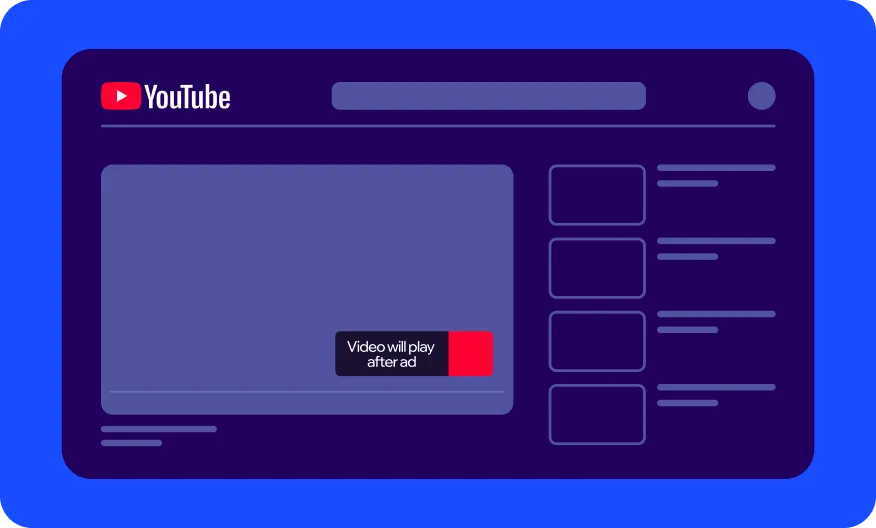
Outstream ads
Outstream ads appear outside traditional video players – they are usually embedded into content like articles or social media feeds. They are less intrusive than the previous video formats and are usually played with no sound (users can enable the sound if they get interested). The 1280x720 size ensures broad compatibility.

Native ad formats
Native ads align with the overall interface, so they are less intrusive – at the same time, they may be less noticeable, which can be a challenge for marketers. They can come in various forms, including banners, carousel ads, etc. However, native ads vs display ads are likely to be the most efficient.
Native video ads
Video ads tend to be more effective than static ones since they are more interactive and catchy. And when they are also native, they can drive significant user engagement, which means an increase in income for you. According to many tests, native video (short, in-feed) demonstrates higher engagement rates than static native placements.
For example, you can offer your partners out-stream ads that are displayed outside the video player. In-article ads, one of the many alternatives, are placed within the body of a blog post or article. Basically, they are a subtype of out-stream ads.
As for the sizes, prioritize the same options as for the classic video ads.
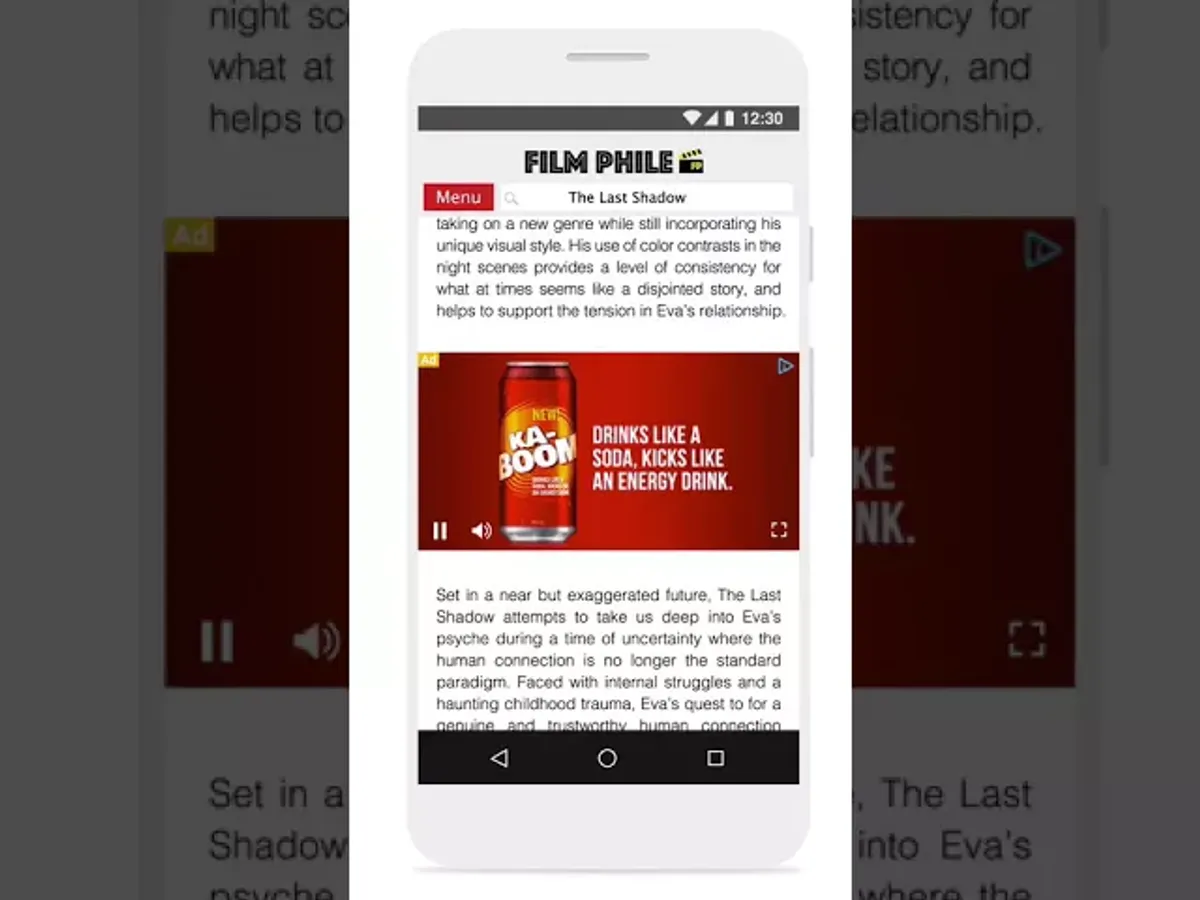
In-feed native ads
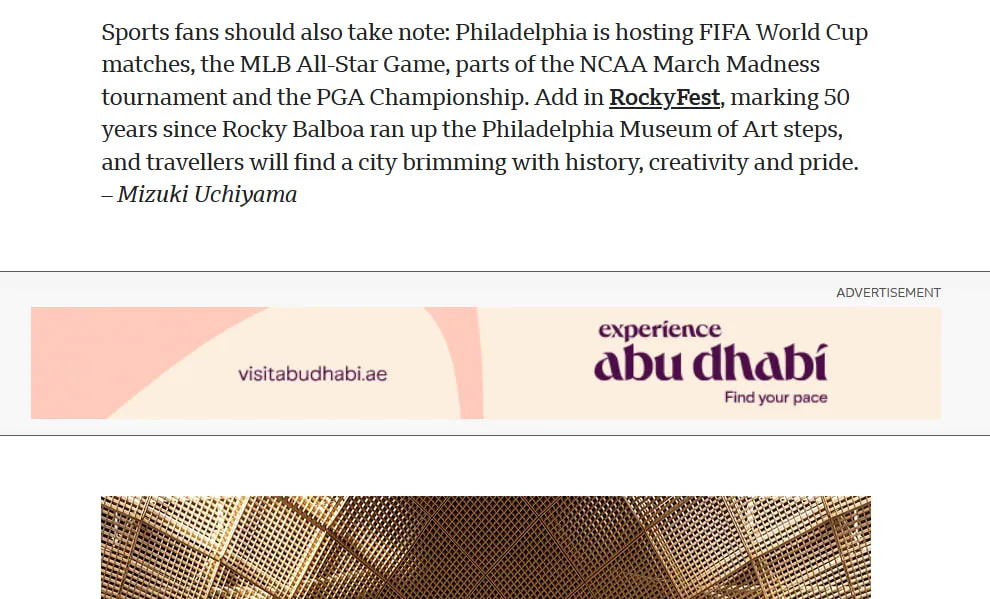
These ads look like regular content within the feed, even though they are often labeled as “advertisement” or sponsored”. Since they match the look and feel of the context, they integrate seamlessly and do not affect user experience. The top-performing sizes include 1200x628 and 1080x1080.
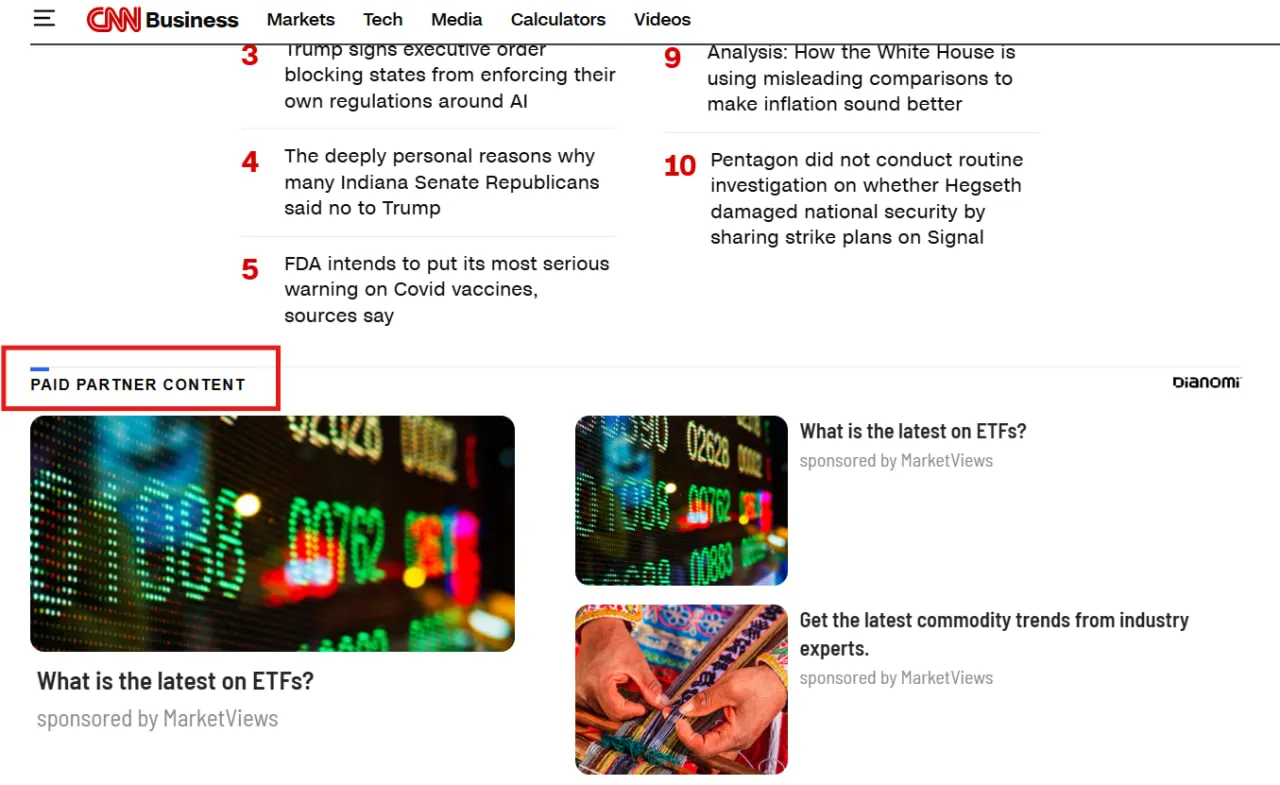
Content recommendation widgets
These ads can usually be found at the end of the articles, within feeds, or in sidebars. They recommend relevant content or products that match users’ interests without disrupting the browsing experience. It is essential to keep the design responsive, as the size of such ads is not the key factor affecting their performance.
 Programmatic & interactive ad formats
Basically, the majority of ad types can be launched programmatically, including video, native, display, and other formats. Here are several more examples.
Push ads
Push advertisements work in the same way as system notifications on a smartphone or desktop. Thanks to their smooth integration into the screen, they remain highly visible but non-intrusive at the same time, which is good for user experience. As for the best sizes, they are 1000x500, 1200x628, and 320x100.
For you, offering push ads on your ad exchange platform will be beneficial as well. Such ads are effective in terms of driving engagement, so they can positively affect your revenue.
 CTV ads
What is CTV advertising? CTV, which stands for connected TV, is any type of TV that allows watching video content online. However, the range of CTV devices is not limited only to smart TVs. It also includes gaming consoles, adapters like Apple TV, etc.
Due to the growing popularity of smart TVs and other devices, CTV ad spending is increasing, too. Only in the USA, it is expected to exceed $52 billion by 2029. For you, this means an opportunity and an additional source of income. CTV ads usually cannot be blocked, which is a benefit for advertisers. At the same time, these ads can be rather expensive.
In-stream CTV video ads are typically integrated at the beginning or middle of video content. Most often, they are embedded in the original content piece, and viewers cannot skip or close them. The duration of the standard in-stream online ad is up to 30 seconds. 1920x1080 is typically the top-performing size.
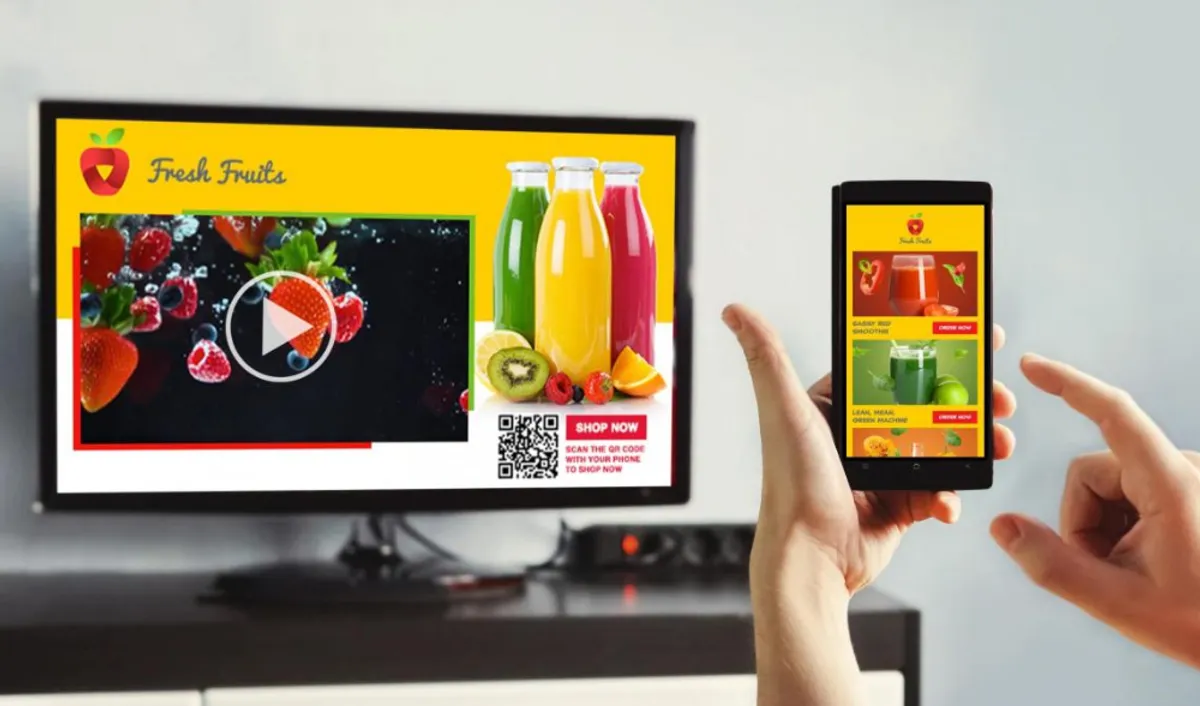
In turn, interactive advertising refers to the types of ad formats that encourage the viewer to take action. For instance, this can be scanning a QR code and making a purchase right after interacting with the ad.
 Rich media ads
Rich media is an umbrella term for advertisements with advanced features like video, audio, games, animations, etc. These creative ad formats encourage users to interact with them, which is good in terms of driving engagement. While marketers get an opportunity to stand out from the crowd and draw customers’ attention, owners of ad exchange platforms benefit from the higher cost of rich media ads. At the same time, such advertisements often require more production time, which is a disadvantage for advertisers.
Rich media ads can be designed as banners, dynamic ads, interstitials, videos, floating advertisements, etc. The most effective sizes include 300x250, 300x600, 728x90, and 320x100.
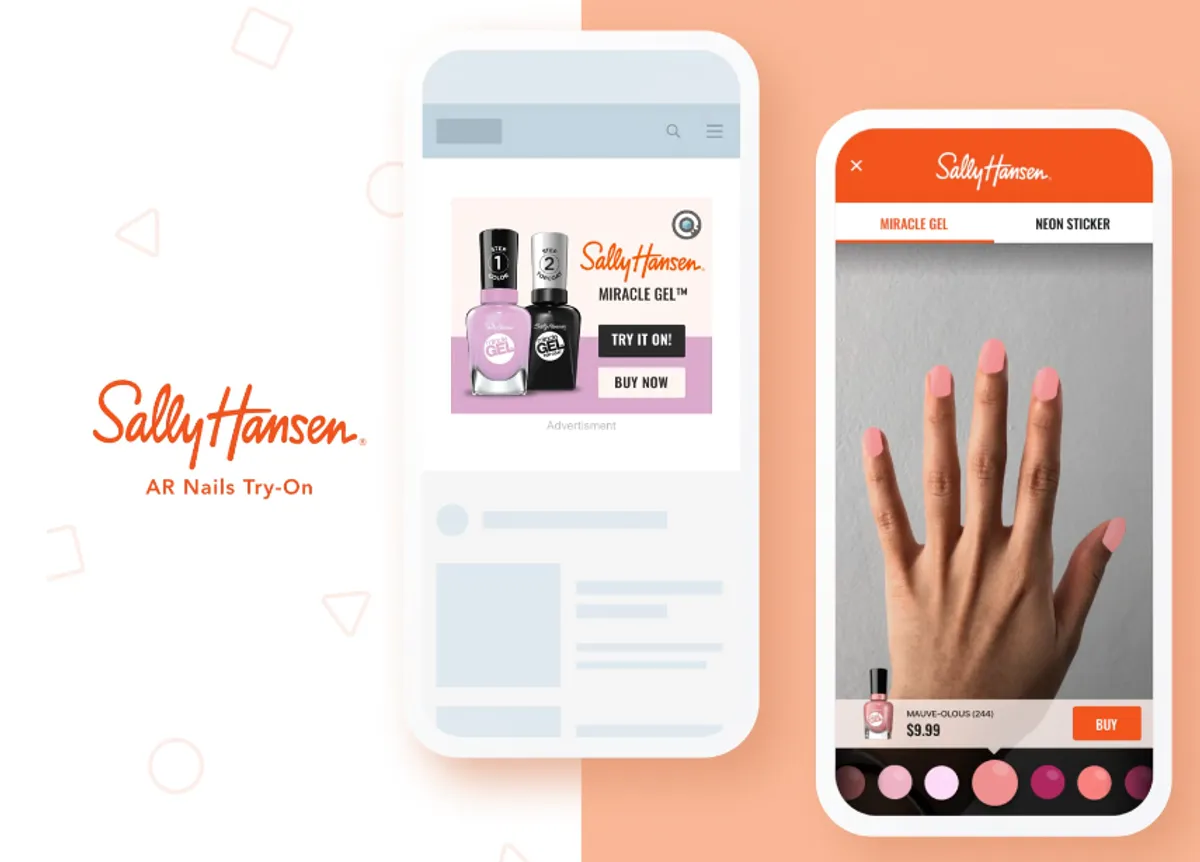
For instance, Sally Hansen created an augmented reality ad that allowed users to try different colors of nail polish.
 Mobile-optimized ad formats
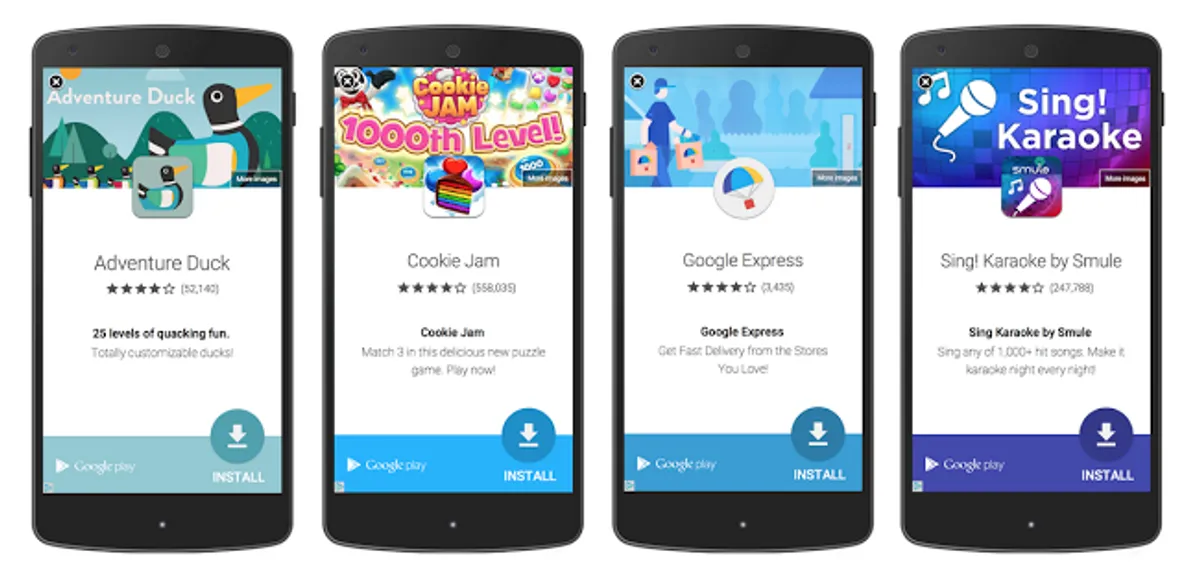
Mobile ads are any ads that are shown on mobile devices, and you have already seen relevant advertising formats examples in this guide. Using such formats is a must for advertisers since the number of smartphone users is growing continuously. For ad exchange owners, offering in-app and mobile web channels means an additional source of revenue.
Mobile ad sizes play a crucial role in the effectiveness of these ads. Mobile ads are usually cheaper to produce, but advertisers need to pay special attention to their design. Smartphones have smaller screens, so ads must be easy to click or close. Besides, due to the screen size, mobile ads often look annoying to users, which means that ads must be creative and personalized.
Playable ads
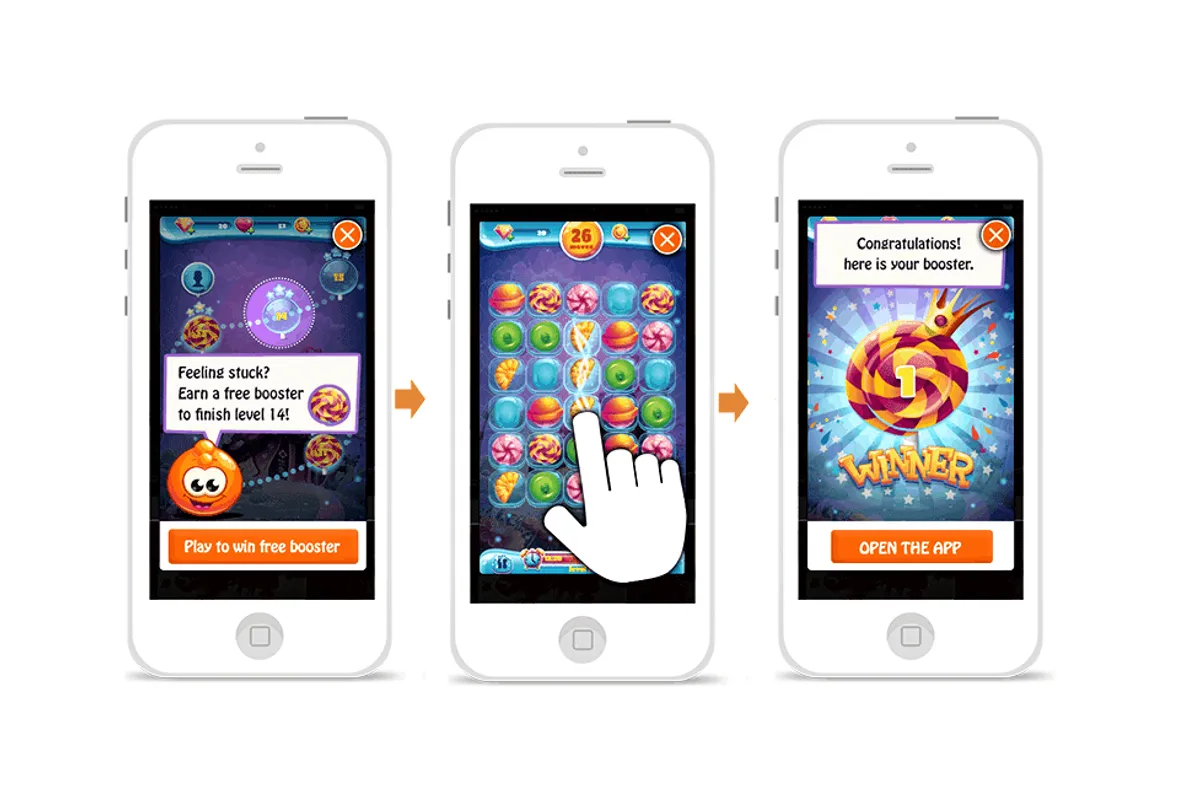
Playable videos resemble a mini version of a mobile game, allowing users to try a new game before installing it. The ad unit contains an installation link leading to the app store. The top sizes are 300x250 and 336x280.
Rewarded videos
Rewarded videos give users incentives in exchange for viewing ads. Users can skip or watch an ad to get coins, extra points, access to in-game items, special content, and certain app features. The most effective sizes are 320x180, 320x480, 480x320, and 300x250.

Interstitial ads
Interstitial ads cover the entire screen, suggesting users to move to the destination page or get back to the app content. Interstitials may include features from rich media or playable ads, and they are impossible to miss. The top sizes are 320x480, 480x320, and 336x280.
Search & commerce-based ad formats
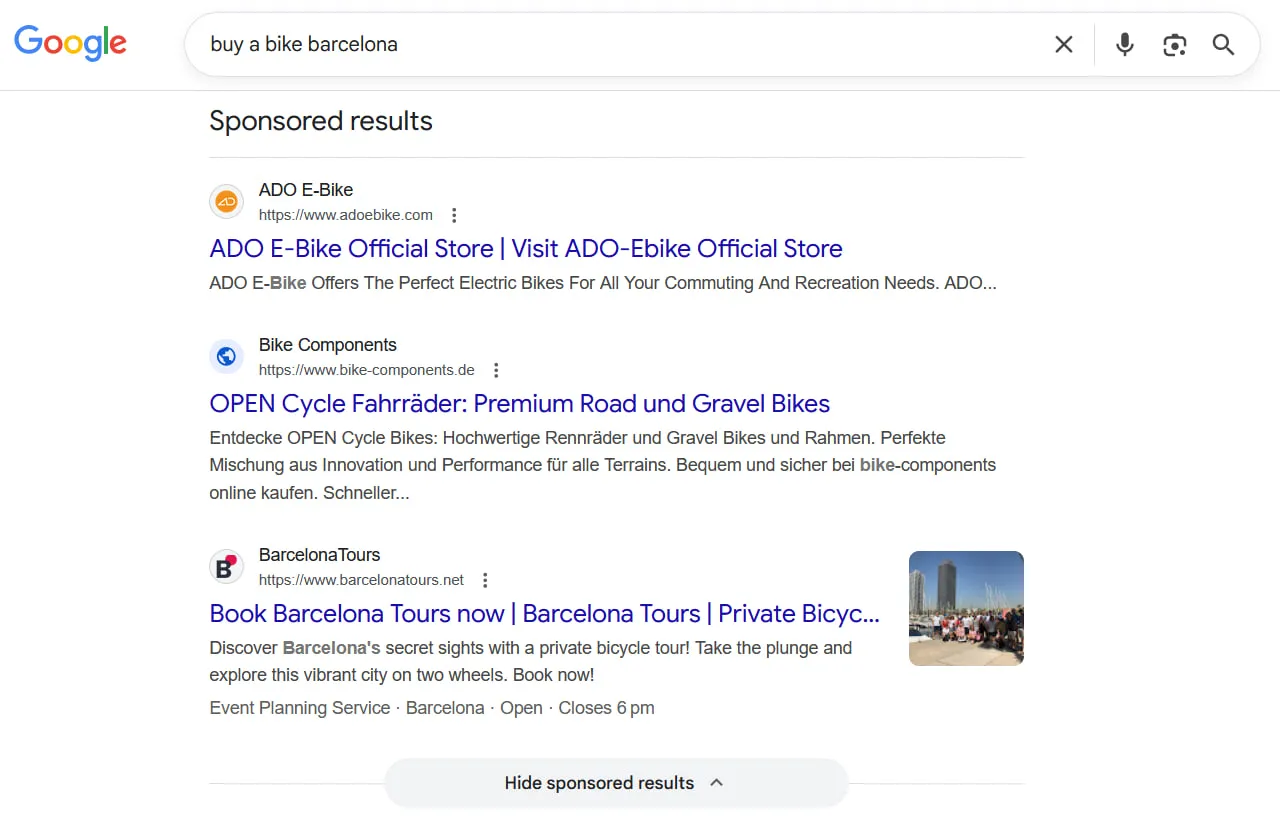
These ads are delivered to users actively searching for something specific. They blend with the search results; however, they are marked as “sponsored content” or “sponsored results”.
Sponsored search results
Sponsored search results appear on the search results page according to the keywords that users use for their queries. Such ads are highly visible and can drive great results since they are highly relevant to user intent. The size is determined by Google’s algorithms. You can learn more about specs for all Google Ads campaign types here.
 Product listing ads
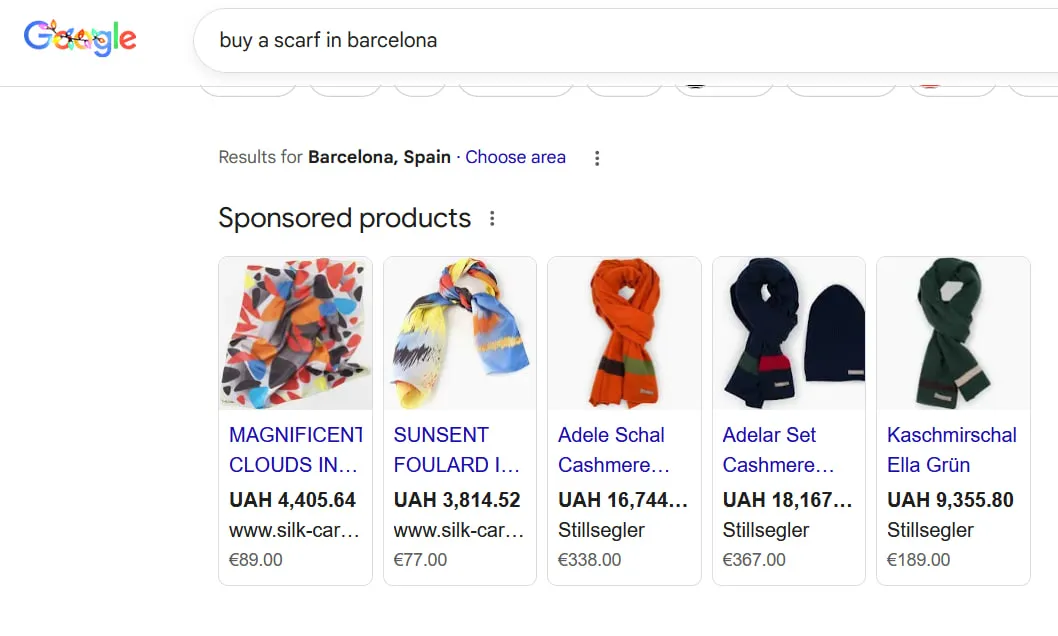
Product listing ads are visual advertisements that appear when users search for specific products. They can help advertisers boost sales since they are delivered to customers with high purchase intent. The recommended image size is 1200x1200.
How to choose types of advertising
As we already said, if you are an advertiser, the choice of ad formats depends on your goals. However, it is also essential to consider your target audience. For instance, after analyzing your campaigns, you may discover that native video ads deliver better results than banners. This way, you may want to prioritize the native video format.
At the same time, it is important not to focus on a single format. Experiment with different options to identify the formats that resonate with your customers the most. Keep analyzing your campaigns to find out how the selected formats perform and adjust your strategy.
For the owners of ad exchange platforms, it is crucial to offer a variety of formats of advertising to their partners. Continuous analysis is also a requirement here. By tracking the performance of your solution, you can discover what formats are the most profitable and adjust your ad monetization strategy accordingly.
The Attekmi experience with ad formats
With ad exchange solutions from Attekmi, you do not need to integrate digital advertising formats on your own. Everything is already done for you, so you will be able to offer the following ad types to your partners:
Banner ads;
In-stream and out-stream video ads;
Rewarded video ads;
Audio ads;
Native banner, video, and other ads;
CTV ads.
As for the available environments, they are desktop, in-app, mobile web, and CTV.
Moreover, when setting up endpoints for demand partners, you can specify the allowed ad sizes, as well as allow or block player sizes to exclude requests that do not meet your DSP partner’s requirements. This way, your ad exchange will become more effective, which is good for your income.
In 2022, in-app video ads became the most profitable for Attekmi’s clients, and since this format is already implemented in our platforms, you can start earning in no time. Instead of building your own ad exchange from scratch, you can opt for one of our solutions and get a fully working platform within a week.
For instance, it took Roqoon Media only 3 months to reach 262% revenue growth, and you can achieve the same heights.
Conclusion
For marketers, selecting the best ad formats should be a data-driven decision. While it is important to try multiple options, analyzing the performance of different campaigns is a way to understand which formats and sizes are the most effective.
For ad exchange owners, offering a variety of Internet advertising formats to SSP and DSP partners is the way to gain a competitive advantage. While your partners benefit from freedom of action, you increase your media trading income.
Note that there is no need to build an ad exchange platform from scratch. With Attekmi’s solutions, you can launch your own profitable marketplace in the shortest time possible.
Does Attekmi look like the right choice? Let’s get in touch.
FAQ
To choose the right types of ad formats for your platform, find out which of them are the most demanded at the moment and analyze your competitors, as well as current trends. For instance, CTV ad spend is continuously growing, meaning that offering this format to your DSP and SSP partners would be beneficial.
It would be useful to conduct research and find out which ad formats advertisers invest in at the moment. Monitor the trends to stay on top. After your ad exchange starts working, track its performance and analyze your earnings continuously. This will help you identify the most profitable digital ad formats.


'%3e%3cpath%20d='M415.5%20380.133C415.5%20554.655%20911.5%20609.133%20714%20818.633C447%20850.133%20200%20677.655%20200%20503.133C200%20328.611%20341.478%20187.133%20516%20187.133C690.522%20187.133%20415.5%20205.611%20415.5%20380.133Z'%20fill='%231A4CFF'/%3e%3c/g%3e%3cg%20filter='url(%23filter1_f_654_7533)'%3e%3cpath%20d='M819.862%20539.146C969.42%20389.588%20963.912%20273.412%201000.6%20310.096C1037.28%20346.78%201059.92%20590.588%20910.362%20740.146C760.804%20889.704%20503.861%20847.646%20447.362%20760.146C348.862%20547.146%20670.304%20688.704%20819.862%20539.146Z'%20fill='%23052AAE'/%3e%3c/g%3e%3cg%20filter='url(%23filter2_f_654_7533)'%3e%3cpath%20d='M647.331%20285.725C443.031%20230.983%20408.998%20311.131%20358.6%20243.729C295.498%20194.631%20571.852%2052.1078%20776.152%20106.85C980.452%20161.592%201072.5%20405.139%201024.97%20497.82C889.759%20689.623%20851.631%20340.467%20647.331%20285.725Z'%20fill='%231B4DFF'/%3e%3c/g%3e%3c/g%3e%3cdefs%3e%3cfilter%20id='filter0_f_654_7533'%20x='0'%20y='-12.8672'%20width='960.465'%20height='1035.25'%20filterUnits='userSpaceOnUse'%20color-interpolation-filters='sRGB'%3e%3cfeFlood%20flood-opacity='0'%20result='BackgroundImageFix'/%3e%3cfeBlend%20mode='normal'%20in='SourceGraphic'%20in2='BackgroundImageFix'%20result='shape'/%3e%3cfeGaussianBlur%20stdDeviation='100'%20result='effect1_foregroundBlur_654_7533'/%3e%3c/filter%3e%3cfilter%20id='filter1_f_654_7533'%20x='228.938'%20y='103.27'%20width='998.816'%20height='935.965'%20filterUnits='userSpaceOnUse'%20color-interpolation-filters='sRGB'%3e%3cfeFlood%20flood-opacity='0'%20result='BackgroundImageFix'/%3e%3cfeBlend%20mode='normal'%20in='SourceGraphic'%20in2='BackgroundImageFix'%20result='shape'/%3e%3cfeGaussianBlur%20stdDeviation='100'%20result='effect1_foregroundBlur_654_7533'/%3e%3c/filter%3e%3cfilter%20id='filter2_f_654_7533'%20x='149.441'%20y='-105.473'%20width='1087.81'%20height='860.301'%20filterUnits='userSpaceOnUse'%20color-interpolation-filters='sRGB'%3e%3cfeFlood%20flood-opacity='0'%20result='BackgroundImageFix'/%3e%3cfeBlend%20mode='normal'%20in='SourceGraphic'%20in2='BackgroundImageFix'%20result='shape'/%3e%3cfeGaussianBlur%20stdDeviation='100'%20result='effect1_foregroundBlur_654_7533'/%3e%3c/filter%3e%3c/defs%3e%3c/svg%3e)